IONA MILLER
  • Home
  • PUBLICATIONS
  • ARTICLES 2017
    • MAJOR ARCANA
      • ARCANA VIDEOS
    • MYTHIC FORMS
      • NUIT
      • GEN-ISIS
      • SOBEK - Wild Psyche
      • KYBELE
      • Helios Uplifter
      • HELIOS TITAN
      • Aphrodite
      • THANATOS
    • ART & TRAUMA
    • PAINTING
    • DAIMON
    • ANIMA MUNDI
    • WORLD WEARY
    • INTERIORIZED VISION
    • TRANSFIXED
    • REFLECTIONS
    • CREATIVE APPROACH
    • SELF-EXPLORATION
    • SELF KNOWLEDGE
    • THEURGY
    • ART & SOUL
    • ESOTERICS
    • INDIVIDUATION
    • LABYRINTH
    • JUNGIAN QABALAH
    • THE BEAD GAME
    • DUNE MYTHS
    • NEW AGE CRITIQUE
    • PHILOSOPHERS STONE
    • BLACK MADONNA
    • ST. GERMAIN Film
    • DRAGON ARCHETYPE
    • TOTAL ECLIPSE
    • PROJECTS
      • PSYCHE
      • Sobek
      • Athena 2018
      • Ares
      • Apollon
      • Horus
    • Afterlife
    • Transformation
    • Transgressive Forces
    • Wisdom Light
    • Sacred Sex
    • TARANTISM
  • ABOUT
  • GENEALOGY
    • Here Be Dragons Home
      • DRAGONTREE
      • Myth Ancestors
      • EGYPT
      • Grail
      • CATHARS
    • 100 Generations
    • Kindred Spirits
    • Ancestors
    • Lineage
    • XX
  • GNOSIS
  • HEALING
    • Metaphors
    • Holo Healing
    • Microvibrations
  • Mind-Body
    • BODY & SOUL
  • Io Art
  • FRONTIER SCIENCE
    • SEDLAK
    • Pineal DMT
    • Bioholography
    • The Field
    • Holographic Archetypes
  • DREAMS
    • Dreamwallker
  • SACRED GEOMETRY
    • QABBALAH
      • DIAMOND BODY
  • ALCHEMY
    • PRIMA MATERIA
  • VIDEOS
  • ARCHIVES
    • Climate 2020
  • Journal
  • Contact
  • Wrestling Thanatos
  • Innate Imagery
  • SIRIUS RISING
  • UFO
  • OANNES
  • DREAMHEALING
  • SELF THERAPY
  • ART SOUL
  • PSYCHE
  • XYZ
  • EVENT HORIZON
  • HADES
  • Thanatos Myth
  • Home
  • PUBLICATIONS
  • ARTICLES 2017
    • MAJOR ARCANA
      • ARCANA VIDEOS
    • MYTHIC FORMS
      • NUIT
      • GEN-ISIS
      • SOBEK - Wild Psyche
      • KYBELE
      • Helios Uplifter
      • HELIOS TITAN
      • Aphrodite
      • THANATOS
    • ART & TRAUMA
    • PAINTING
    • DAIMON
    • ANIMA MUNDI
    • WORLD WEARY
    • INTERIORIZED VISION
    • TRANSFIXED
    • REFLECTIONS
    • CREATIVE APPROACH
    • SELF-EXPLORATION
    • SELF KNOWLEDGE
    • THEURGY
    • ART & SOUL
    • ESOTERICS
    • INDIVIDUATION
    • LABYRINTH
    • JUNGIAN QABALAH
    • THE BEAD GAME
    • DUNE MYTHS
    • NEW AGE CRITIQUE
    • PHILOSOPHERS STONE
    • BLACK MADONNA
    • ST. GERMAIN Film
    • DRAGON ARCHETYPE
    • TOTAL ECLIPSE
    • PROJECTS
      • PSYCHE
      • Sobek
      • Athena 2018
      • Ares
      • Apollon
      • Horus
    • Afterlife
    • Transformation
    • Transgressive Forces
    • Wisdom Light
    • Sacred Sex
    • TARANTISM
  • ABOUT
  • GENEALOGY
    • Here Be Dragons Home
      • DRAGONTREE
      • Myth Ancestors
      • EGYPT
      • Grail
      • CATHARS
    • 100 Generations
    • Kindred Spirits
    • Ancestors
    • Lineage
    • XX
  • GNOSIS
  • HEALING
    • Metaphors
    • Holo Healing
    • Microvibrations
  • Mind-Body
    • BODY & SOUL
  • Io Art
  • FRONTIER SCIENCE
    • SEDLAK
    • Pineal DMT
    • Bioholography
    • The Field
    • Holographic Archetypes
  • DREAMS
    • Dreamwallker
  • SACRED GEOMETRY
    • QABBALAH
      • DIAMOND BODY
  • ALCHEMY
    • PRIMA MATERIA
  • VIDEOS
  • ARCHIVES
    • Climate 2020
  • Journal
  • Contact
  • Wrestling Thanatos
  • Innate Imagery
  • SIRIUS RISING
  • UFO
  • OANNES
  • DREAMHEALING
  • SELF THERAPY
  • ART SOUL
  • PSYCHE
  • XYZ
  • EVENT HORIZON
  • HADES
  • Thanatos Myth
Search

IO ART

Picture
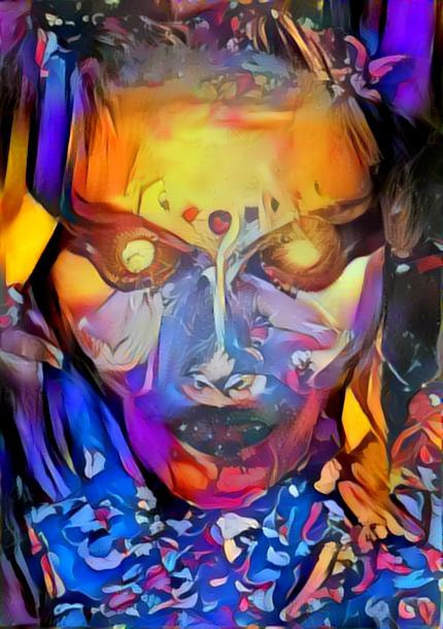
Daimon, by Io

“Non-objective art draws its contents essentially from “inside.” This “inside” cannot correspond to consciousness, since consciousness contains images of objects as they are generally seen, and whose appearance must therefore necessarily conform to general expectations…. Behind consciousness there lies not the absolute void but the unconscious psyche, which affects consciousness from behind and from inside, just as much as the outer world affects it from in front and from outside.” ~
Carl Jung, CW 15, P. 206

But we spend our free time listening to the wireless and rushing off to the cinema. Yet much of our western neurosis comes from the fact that we do not find enough time for ourselves; it would be wiser to meditate and seek the Void when we need rest, than to run after outer distraction. ~Carl Jung, ETH Lectures, Page 128.

"...the function of art is to provide a sense of existence, not the insurance of some meaning; so those who need an insurance of meaning, who do not feel confident about themselves or who remain upset when they know that the system Of meanings that supported them in life has shattered, they must certainly be those who have not yet tried, with intensity, with continuity or sufficiently convincing, that sense of existence, spontaneous and voluntary rise, which is the first and more Deep characteristic of being and which is the responsibility of the art of awakening. What is the meaning of a flower? And not having it, then, would the flower not exist? " --Joseph Campbell, The Flight of the Wild Gander. Explorations in the mythological dimension (Mia Traduzione)
Picture
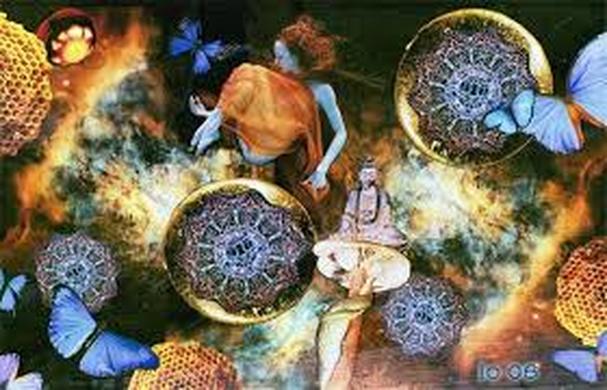
Multimedia Art by Iona Miller
Picture
Iona Miller
Artist's Statement 2017

Artist Statement
Iona Miller is a nonfiction writer for the academic and popular press, clinical hypnotherapist, and multimedia artist. Writing itself is a developmental process that creates self-discovery, image, and meaning while integrating learning, memory, and experience.

The secret of the possible is not as a spiritual fad, but beyond
the conflation and confabulation of romantic and spiritual quests. Psyche and its unity in multiplicity is the umbilical cord that connects our thoughts and feeling to life, nature, science, art, and cosmos.

We should now proceed to find a neutral, or unitarian, language in which
every concept we use is applicable as well to the unconscious as to matter, in order to
overcome this wrong view that the unconscious psyche and matter are two things.

--Professor Wolfgang Pauli

 Since psyche and matter are contained in one and the same world, and moreover are in continuous contact with one another and ultimately rest on irrepresentable, transcendental factors, it is not only possible but fairly probable, even, that psyche and matter are two different aspects of one and the same thing. ~Carl Jung; CW 8, Para 420.

Nowhere are we closer to the sublime secret of all origination than in the recognition of our own selves, whom we always think we know already. Yet we know the immensities of space better than we know our own depths, where -even though we do not understand it-we can listen directly to the throb of creation itself. ~Carl Jung, CW 8, Page 737

Multidisciplinary studies herald the return of the natural philosopher. For example, Jungian psychology with its alchemical metaphors and dynamics provides comprehensive models for uniting psyche and physics, psyche and matter, and demonstrating the indissoluble weld that binds them. It radically revisions the mind/body split, healing that which should never have been torn asunder.

In our inquiries when we go beyond a certain depth in psychology or physics, we enter the realm of the ultimate mysteries of life. The mystic veil of the starry firmament parts revealing the underlying matrix of creation, the luminous ground of the virtual vacuum -- the void created by the zero point radiative fluctuation of matter and antimatter, the void that gives birth to all images and form.


In our pursuit of Ultimate Reality, we can only move from the known to the metaphorical or literal unknown. We search for more effective ways of communicating ideas and new dimensions of practice, creative work, sacred influences, and self-awareness practices. All bear on cultural evolutionary theories and interaction with genetic evolution. The origins and destiny of life in the universe will likely continue to elude us. Still, we each search for our own meaningful view of the world.

In Seven Sermons to the Dead, Jung says,
"I began with nothingness. Nothingness is the same as fullness. In infinity full is no better than empty. Nothingness is both empty and full. ...This nothingness or fullness we name the PLEROMA. Therein both thinking and being cease, since the eternal and infinite possess no qualities. In it no being is, for he then would be distinct from the pleroma, and would possess qualities which would distinguish him as something distinct from the pleroma."

In the Big Picture of human existence there is no Ur-text for a deep history that keeps getting scientifically pushed back further and further into the mists of pre-historic times. For the first time, we know the laws and history of our universe. We forget our cosmic and cataclysmic disasters of the last 10,000 years at our own peril, yet such comprehension is 'burdonsome information.' Never has a group of generations had so much knowledge to adjust to.

Our era is one of gene-culture co-evolution -- the extension of biology through culture and our interaction with one another and the environment, like it or not.
We are simply trying to help us all understand what 'digital' technology has already done to us, at a higher-level than typical academics. As humans, we are still tasked with dissolving our ego-mask, the immediacy of anomalous and religious experience, and facing death with heightened awareness. The Mystery confronts us all.

External triggers include
: sacred places, favorite pastimes, mind altering substances, awesome or destructive nature, cognitive dissonance, interrupting habitual action, shock, trauma, thrill, fright, severe or chronic illness, health problems, encounter with death or supernatural event, mental or emotional instability, superstitions, religious or mystical experience.

Internal triggers include: concentration, visualization, creativity, prayer, dialogue, active imagination, trance, invocation, resonance, rapport, empathy, contagion, paradigm shift, rhythmic and ritual arts, synchronicites, flow, dreams, 'gifts', arts, nature mystic experience, sacred use of substances, emptying, mindfulness, glimpsing coherence, spontaneous universal consciousness.


The Theater of the Real
Perhaps our single most pressing question is 'what sort of humans will we have in 10-20 years?' Our technologies have already made us into cyborgs, with enhanced memory and communications for which even our collective unconscious has no precedent. Kurzweil predicts "we will all be hybrids by 2030."

This enormous rapid change brings new meaning to the axiom to "Know Thyself" through self-awareness or traditional means. The paradox of our time remains progress or fall, and only some choices are ours to make, whereas cosmos imposes its own.

But the Cosmic Memory Field, the underlying fundamental substrate of manifestation, now competes with Google at least in this little corner of the galaxy we call our awareness, our connection to wider reality.

We are heading toward a technological 'hive mind' of collective consciousness, if we last that long. And yet, we still have no idea what 'consciousness' is. Some say the body is to space what consciousness is to time -- our universality. The larger and deeper reality is transcendent and immanent.

We only have 'beliefs' about non-ordinary or marginal states:
Neuro-Bio-Info-Cogno  -- ordinary words, symbols, and constructs. We adapt or withdraw into denial, depression and defenses from the overwhelming stress of unmanageable situations.

The standard view, ordinary perception of our essential nature is a lower resolution view of our existence. The phenomena of exceptional states challenge us with 'virtual realities' which range from self-delusion and misguided and misapplied inner authority to universal truth. Open mindsets provide support for personal transformative experiences, including non-dual or integrative ones.

Our challenge remains reconciling our subjective and objective experiences which fuse at the threshold of the mind-matter interface, sometimes expressing as synchronicity, acausal coincidence. Cognitive reductive views of physical science are all brain and neurology. Materialists consider exceptional experiences aberrations, filtering our authenticity with faulty narratives and object-oriented psychological models.

Shamanic views are overly-dramatized and controversial. We still try to reconcile ordinary and transpersonal experiences, and sometimes need words or help to digest these, after the fact. Different views embrace different models.

Transpersonal psychologies try to balance both. We are all capable of understanding these deep things conceptually at some level. Most of our ordinary 3D operations are carried out unconsciously or preconsciously.

All models for navigating and adapting to life today have limited practicality, such as assumed truths, the supernatural, miraculous, superstitious, and self-delusional. There are vertical and horizontal dimensions to life and stabilization is a key concept. We can enrich ourselves with psychological language and deliberately leave collective traditional conditioning for individual values. The bottom line is that when we change our attitudes we change our physiology.

But, as ever, we must focus on the present, exploring territory beyond the conventional descriptions of what is available. This is the open frame of our pursuit, scientific or spiritual -- the "pathless path" of individuation or The Tao, as described by Jung, Krishnamurti and eminent physicists.

Sudden awakening to our pure nature is activation of our awareness potential. But we cannot will non-dual
consciousness since the mind cannot transcend itself through the sheer power of its own self-understanding. Personal integration unfolds over a lifetime.

But we can learn to be more articulate about our extraordinary experiences and aspirations to practice and service, whether spiritual or humanistic. Whether we call it the boundless reality of God, or the pre-spacetime vacuum that gives rise to matter, this Mystery is the quintessence of impenetrable darkness that contains the spark of life.

Ervin Laszlo proposed that the quantum vacuum, the field from which the universe is born, is conscious with all the information from the Big Bang to now. Laszlo says the universe is conscious life emerges from the quantum vacuum. If we linked to all people who have ever lived, we can access them through the primordial field if the past has never gone away, and informs the present. We can access extraordinary abilities that are completely natural.

We can find inspiration in culture-heroes, but ultimately must make our own way through the 'dark forest', like the Grail Knights. Krishnamurti said, "I maintain that Truth is a pathless land, and you cannot approach it by any path whatsoever, by any religion, by any sect." (The Dissolution of the Order of the Star, 1929). As Einstein remarked, "I think 99 times and find nothing. I stop thinking, swim in silence, and the truth comes to me."

As
Baudelaire suggests, symbolism and 'correspondences' help us "Extract the eternal from the ephemeral." Generic symbolic languages such as esoterics, alchemy, and Qabalah articulate the phenomenology of inner experience. They help us wake up and grow up.

Our
deeply human experience of awe spans from “awful” to the “awesome” and all ambiguous spaces between. including technology, storytelling, the narrative arc, and the evolutionary, even empathetic value of having our minds blown by direct experience of expansive knowledge. We can all get such concepts conceptually, but experience makes them real.

They include general experiences, lasting effects, enduring benefits, prior influences, self-observation, stabilization and resistant factors. Our work includes debunking preconceptions and theories about consciousness by digging deeper, suspending belief, and philosophy of science.


Symbols represent transcendental and timeless values and stories. They help us describe our kinesthetic, aesthetic, cognitive, emotional, moral, and spiritual awareness, engagement, and intelligence.

Jung said, "
Childlikeness or lack of prior assumptions is of the very essence of the symbol and its function. The symbol is the middle way along which the opposites flow together in a new movement, like a watercourse bringing fertility after a long drought." (CW 6, Para 442-443.) "It is only possible to live the fullest life when we are in harmony with these symbols; wisdom is a return to them." (CW 8, Para 794)

"Psychic development cannot be accomplished by intention and will alone; it needs the attraction of the symbol, whose value quantum exceeds that of the cause. But the formation of a symbol cannot take place until the mind has dwelt long enough on the elementary facts, that is to say until the inner or outer necessities of the life-process have brought about a transformation of energy."  --Carl Jung, CW 8, Para 47.


This is how we think about and experience that reality -- our relationship with the world, people, and things. We pattern ourselves after heaven and earth as organizing principles. But are we getting the cosmology right to form a credible, coherent, functional view so our myths can develop in today's context and new sky? Is it a unifying art of creative connectivity?

We are connected to the cosmos through the inner psychic realm, inner and outer forms of patterns including aesthetics, our innate sense of beauty -- the 'polished mirror' of visionary receptivity. Mystical imagination is more about experience than understanding.


Symbolism has always been a hermetic art. Yeats, in his 1901 essay on “Magic” describes how our minds and memories continually flow into each other as part of ‘the great memory of Nature herself’ (Anima Mundi). He suggested that artists and poets can access this memory through the use of symbols, plumbing the Mysteries of Nature, spirit, and consciousness.

On the other hand, perhaps we can remember what we have forgotten about our essential nature: "
When the soul is born it drinks lethe so that it forgets its prenatal life. For the ancient Greek, truth was aletheia, meaning the absence of forgetfulness or the presence of memory. Plato uses this term aletheia to distinguish the eternal world of forms from the phenomenal world of appearance; aletheia refers to the world of forms. The world of appearances is only a copy or an imitation of that eternal world; aletheia is the original. Thus Plato could say in Timaeus: “As being is to becoming, so is truth [aletheia] to belief.” Belief is a kind of copy of truth, not the real thing."  --Edward F. Edinger, Aion Lectures, Pg. 128.

By engaging with imagination and intrinsic spiritual processes, symbols are also a means of healing spirit, soul, and body with a sort of aesthetics of trauma. James Hillman teaches, "To heal the symptom, we must heal the person, and to heal the person we must first heal the story in which the person has imagined himself."

We need bigger stories to inform our personal narrative and interrelationships: "And instead of imagining that I am dysfunctional, my family is dysfunctional, you realize what R. D. Laing said long ago and Freud, of course, too: it is the civilization which is dysfunctional. The society is dysfunctional. The political process is dysfunctional. And we have to work on cures that are beyond my cure. That's revolution." (Hillman, We've Had a Hundred Years.., pp. 218-219)

Community, cultural, and ecological work is also psychological. 'Noticing' is the ground of all such work, bridging conscious and unconscious with dialogue, listening to the message within our symptoms, continually "seeing through" to new acts of insight. These concepts help us move beyond over-zealous, power-driven, ethnocentric, and egocentric ways. The ethic is one of engagement, participation, and co-creation. moving deeper into love.

Rather than paying faddish self-styled experts, we need to pay attention to the depth of narrative space, dreams and physical feelings, the spaces that connect our stories, the relationship field, and our psycho-genealogical lines.

Beyond state nomenclature, we can develop internal maps or taxonomies of conscious that expand our ability to conceptualize, building a vocabulary to discuss such states and experiences. Some models include those by John C. Gowan, Stan Grof, and Ken Wilber.


This expanded awareness includes ecstatic states of attention which become operational as more lucid dreams and early-life recall, observations of synchronicities, and spontaneous events. Marcus Aurelius says, "Know the joy of life by piling good deed on good deed until no rift or cranny appears between them."

There may be a missing dimension in our worldview. All reality has rhythmic, musical, and artistic correspondences. Perceived through the heart, the beauty and ugliness of the world resets our moral compass. Jung tells us, "Morality is not imposed from outside; we have it in ourselves from the start—not the law, but our moral nature without which the collective life of human society would be impossible." (CW 7, Page 27).

Art, including the healing arts, bridges the great moral harmony of the universe with our own souls. Actions flow from compassionate witnessing, rather than turning away from suffering. We need to uncover collaborations with new spaces and the healing power of narrative history.
http://ionamiller.weebly.com/healing-narratives.html

Nature's Narrative

"Buddhist contemplatives assert that the first moment of mental consciousness of a human fetus arises not from the brain but from the preceding moment of substrate consciousness of the conscious being that has been conceived. The practice of shamatha may provide an experiential means for putting this hypothesis to the test." --B. Alan Wallace:
A Manifesto for the Mind Sciences and Contemplative Practice (2012, p 189)


Our mind doesn't store memories; it is memory. Our wounds are necessary to fulfill our calling. The marks of memory are the signs of destiny. Penetration of the mystic veil often comes through one's wounds. They allow us to see through to an immaterial sense of being.

"There is a memory of Nature that reveals events and symbols of distant ages. The mystics of different countries have spoken of this Memory in several centuries ... [...] William Blake calls his images" the sculptures of the Sala de Los "And states that all events," all love stories, "draw on their renewal." --William Butler Yeats, Anima Mundi

We are wounded simply by our relation to the world, the world's body. The world and body are the same stuff and share vision. The mind can also obscure the body, as lived experience -- the core, the limbs, the scars, the head, the back. It changes like a landscape.

Miracles of the body are triumph or transcendence over decay. We don't forget the knowledge of death until we experience it. Body is material (animal imagination), sensual, metaphorical, and spiritual. Its
parts have personal, mythic, and cultural (aesthetic, social, political, and medicalized, mutilated, etc.) significance in a wide range of cultures.

Evidence suggests spirituality emerged from female body mythology as the matrix of birth. It led to a recognition of time and heavenly cycles linking earth and sky. The body's sacred geography is the primary genesis and root of mythic imagination, physiology, and psychology. It is the body that tries to find place, identity, origin, home. Soul thinks with reference to the body and body image.


"Being that has soul is living being. Soul is the living thing in man, that which lives of itself and causes life. Therefore God breathed into Adam a living breath, that he might live."
~Carl Jung, CW 9i, Para 56


Meaning is a non-material imaginal dimension. Imagination is a vital spiritual function, inseparable from the World Soul. Psyche is soul. Symbols are the currency of consciousness and the connective tissue of the mind-body correlation. . . . "the spirit is the life of the body seen from within, and the body the outward manifestation of the life of the spirit - the two being really one." (Jung, CW 10, Page 195).

Art draws the viewer into its participatory space. Images and symbols are visible in the psychic aspect of symptoms and behavior. The reader can be involved in a self-disclosing collaborative process mapping the conceptual terrain, including our response to the spiritual uncertainties of our times. Our invisible ground is now simultaneous information that travels at the speed of light, centered everywhere and nowhere.

Innate Image
Iona is a Symbolist and visionary, perhaps more pragmatic and less literal than most with similar interests. Her writing is informed by Jungian, Post-Jungian, Archetypal, Personality, and Transpersonal psychologies, as well as philosophy and meditation.

Jungian psychology
strongly connects with the arts, culture and history of society, which also derive from the imagination. Writing is ordinary magic, natural magic. It can transport the reader to new territory, to 'foreign lands.'


 "Science comes to a stop at the frontiers of logic, but nature does not: she thrives on ground as yet untrodden by theory." ~Carl Jung, CW 16, Para 524.

Dreams remain the royal road to the unconscious, reflecting our mind-body dialogue with nature. "Nature is often obscure or impenetrable, but she is not, like man, deceitful. We must therefore take it that the dream is just what it pretends to be, neither more nor less. If it shows something in a negative light, there is no reason for assuming that it is meant positively." (Carl Jung, CW 7, Para 162)

To Go Up or Down is the Same
Opposites -- actually a unified system of balanced exchanges -- are necessary for life to flow, much like current in electricity. In his natural philosophy, Jung agreed with the physicists that there is no energy without duality.

Heraclitus declared
, "The road up and down is one and the same," but unity is not identity. Consciousness arises from the interplay of primal opposites, but ego resists being overwhelmed by that and tries to suppress that fear of chaos through one-sided polarization.

The psychological path is a middle way. Spiritual paths tend to encourage the glorification of the spirit (ascent) over the body and instincts (descent) we need to keep us grounded. We cannot merely drop the body and soar infinitely skyward, even metaphorically. Nor can we ever comprehend the entire meaning of all ideas, symbols, and myths.

Despite spiritual movements of fullness or emptiness (plenum or void), transcendence or immanence, we are neither solely 'ascenders' or 'descenders.' If our perceptions are flooded with the sacred, eventually we are overcome with  silence. This switch is a product of our paradoxical neurological wiring (Fischer). Soul connects the two movements if we pay attention and engage with it. When we look deeply, the self that we love so much may turn out to be everything else.

Meaning is about connectivity and interdependence with everything else out there: self, others, and cosmos.  As Hillman notes in Re-Visioning Psychology, "
The soul loses its psychological vision in the abstract literalisms of the spirit as well as in the concrete literalisms of the body." Much the same holds true for the sacredness and spiritual values of the Earth, which is synonymous with body and matter, in general.

We cannot deny the body's role in our complete being as we confront the autonomous aspects of our transpersonal nature. Our wounds and blocks are expressed as psychic or somatic symptoms. The body also contains our natural innocence. We are an extraordinary phenomenon of nature. Our notions are conditioned by our experience of space and time.

So, to come 'full circle' we need to find balance. Both upward and downward spiraling movements are expressed in imagery and embedded in our innate physical nature. The deeper self releases the higher self; 'deeper' and 'higher' consciousness aren't really so different. The ultimate paradox is to get higher we have to go deeper.

The psyche of the visionary artist or seer follows unconscious intuitions about the present and the past, and unconscious impulses from both the past and the future. What we call visions are vast, nebulous intuitions. Meanings not consciously intended may emerge. In the absence of  radically polarized notions secure beliefs and critical thinking are compliments to psychological perception. Inner vision opens the whole self to consciousness.

Thus, we circulate among the aspects of our unfolding sacred and natural being as a single systemic reality. In Taoism, seeing and knowing are turned inward by reactivating the more primordial, pre-verbal, or intuitive, or tacit modes of knowledge. Empty knowing and doing resonate freely with the cosmic pulse of life and nature.

Our journey is one into the heart of primal myths, and that path is more art than theology, beyond paths of affirmation or negation. We can simply surrender into the heart of that being. Path-less, content-free, non-conceptual awareness, the ultimate ground state fosters new understandings of reality.
Individuated Wholeness is Mature Freedom.

MytholoGEMS
"Great innovations never come from above; they come invariably from below, just as trees never grow from the sky downward, but upward from the earth." (Jung, CW 10, Para 177)

Our co-creative task is to bring to light the mythologems, the basic core elements, motifs or themes of myth, behind our individual and collective fate. Basic themes include recurrent patterns: survival, relationships, love and war, chaos and order, revenge, self-sacrifice, or betrayal, death and grief, rejuvenation and rebirth. Jung considered rebirth "an affirmation that must be counted among the primordial affirmations of mankind." (CW 9i, Para 207)

Our myths play out in internal and external history. The paradox of myth is that they are cultural creations that declare that the cultural order can never fully contain the meaning of creation in human life. Myths transcend linear time.

Mythologems form the core of our personal myths and the whole gamut of the repertoire of humanity.
They are ways to see the whole picture, without losing the relative specificity of the image as it is given, without interpretation or distortion that stops the imaginal process. We follow the thread of that tale and among tales, connections of meanings and potentialities.

If we stay with the images evoked, that immersion takes us to places where solutions appear. We don't go to the images for answers, but to have a deeper relationship with that part of ourselves. It isn't striving and it isn't ego-heroic. Our goal is self-realization. The process is one of spiritualizing the material and noticing how it is informed.

If certain conditions foster the self, then others, such as rejection, misunderstanding, incongruence or instability, can thwart it. Thwarting of self by the environment can create alienation, negativity, suppression, anxiety, insecurity, distrust, defensiveness, even violence.

Jung pointed out that God is reality itself, and therefore includes the divinity in mankind. The stars are still there in the daytime. The central meaning begins to shine through at every point of contact. The image isn't necessarily what is on the page but what can be provoked, elicited or emerges from the reader's encounter. The participant can enter or engage the dialogue.

Beyond Postmodernism


"At the root of our compulsion to create art is the need to establish some calm point within life's turbulent flow." --Camille Paglia, "Sexual Personae" (Vintage).

Early knowledge of these processes shaped her relationship to the world. She is interested in creativity, experiential therapy, extraordinary human experiences, using interpretive and non-interpretive strategies. Many of today's trends in self-exploration came from the therapeutic communities of the 1960s and perennial wisdom traditions. She is also interested in effects at the global level, unintended consequences, rather than intentions.

Experiential therapies were developed and popularized in later decades, and now are mainstream, thanks to social media. This psychology without walls transcends the consulting room, explores the soul of the world -- the global agora. It deliberately connects with personal history, the arts, culture and history of society, which are also derived from the imagination. Its lessons can be applied by individuals to themselves, adding new depth to Self-help.

Her work is an omni-sensory fusion of depth psychology, personal mythology, meditation, dreamwork, science-art, frontier science, symbolism, philosophy, source mysticism, futuring, digital life, emergent healing, poetics, and paradigm shift. Her framework is semiotic
(image-as-sign) and phenomenological (image-in-consciousness).


Panpsychism is the philosophical view that consciousness, mind or soul (psyche) is a universal and primordial feature of all things. Primordial consciousness gives rise to potentialities, patterns and cycles which are realized as instances -- conscious experience.
Mystics seek the Formless God or Inner Light. While the mystic seeks the frameless, non-conceptual, thoughtless experience of primordial awareness,
the artist seeks every way to navigate mind, and explore its domains by reframing consciousness.

In some languages the verb for 'paint' and 'write' is the same word. Both hand gestures initiate a flow state:
When hand and eye play, awareness of self and object fuse in a new entity on the paper or screen. The inner organizing “urge to pattern and wholeness” differs from willed planning and is free to embody in the product of the process.

Once we reconnect with that core we feel that all is in alignment, including our physical, emotional, mental and spiritual domains. Bathing ourselves in Pure Awareness, communing with the groundstate of our being opens us to new possibilities. Amplifying the inaudible is a way of revealing the radiant essence of life.

Pathos
We feel like ourselves, in our own rhythm, and aligned with Cosmos. This opens us to the synergetic effects of the flow state and synchronicity; doing better than we know; Being In the Zone. This is the authentic life, also known as self-actualization. Potential becomes lived Reality. We can never achieve 100% knowledge and accuracy - this is the psychological Uncertainty Principle.

A struggle of opposites makes the image. When we make art our conscious mind intentionally cooperates with the unconscious depths, and something alive arises from the dead medium.
A sort of being that takes on a life of its own, a significance of its own, suffused with essence. We can embrace a diffused emergent reality, suspending any inclination to know or plan an outcome.


Here we explore relationships of psyche and matter, extraordinary human potential, genres of ritual healing, mythic potentials, hypnotic realities, and therapeutic processes. Cultural phenomenology explores existential significance and cultural meaning of phenomena, and mind-body-spirit modes of attention. The effects of ancient and modern doctrines of religion, science, psychology, media, and the arts hold special interest.

The Tree in the Psyche & Psyche in the Tree
The essence of psyche is myth and ritual, enactment of the stories of the soul, by which we differentiate the unconscious. Myth itself is
the human search for what is true, significant, and meaningful -- the rapture of being alive and full of life experiences.

There is more to genealogy than the search for the historical ancestors. We continue to search for the creative principle in the psyche. What spirit creates psyche and moves soul? Myth can provide psychological insight, just as it can seize and influence psychic life.

James Hillman suggests without paternal descent we have no genealogy to provide structure and content for mythology. This is literally shown in ancient lines of descent from gods and goddesses. It is not literal, but self-revelatory.

Couple after couple are thrown into an existential situation where each searches for their basis of being and continuance. Loss of myth creates existential anxiety. Genealogy is a mythology itself, not just family problems and the soul's spiritual crisis.

The wisdom of Sophia is the feminine contribution providing wider context in the relational union of love and necessity that reconciles us with our fate, necessity, and events -- reconciliation with the silent labyrinth of creation.

Love stays connected to the soul and seeks a way through a sort of personal and universal teleology beyond metaphysics. Such love shows in the spirit in which we approach psyche's phenomena and how faithfully we stick to the image with resourcefulness, inventiveness, and creative intelligence that seeks psychological connection. Creative insight is linked to involvement, engagement, imaginative complexity, aesthetic energy, and psychic beauty.

Approach
This "know thyself" approach is through novel means of presentation, conservation, and curation in a
holistic, participative, contextual and relational way. Inclusion is a strategic move out of reductive frames of reference. “'Know thyself,' means also 'know thy peculiar images.'”

The intention is to promote directions of 'sensibility,' where each viewer can deploy their own narrative and approach to the material presented, blurring the logic of inside and outside, a tension between the universal and the particular, collective and individual.

She articulates the curatorial as critical thought that does not rush to embody itself, but instead raises questions that are to be unraveled over time. There are lots of great stories out there, but not always history. Things tend to look different from inside than outside. Self-realization is a solitary journey, described by Plotinus:
"The way to truth was the journey of a lonely person to that which is eternally alone."

Her labyrinth of works is a free-floating conceptual framework. It is a spiritual, philosophical, and psychological practice. In therapy we work with particular models. But an artist or philosopher can work purely symbolically. The creative impulse is brought to fruition in the world. Such secret forms grow into our life's work and purpose. By communing deeply with the outside world we find the familiar in the unfamiliar.

Works with a trans- quality go beyond mundane time, space, logic and personal taste or aesthetic preference. They connect with our essential Being at the core, reflected in nature and art, piercing time to find eternity. Transcending content, they open a new dimension...an invisible initiatory dimension. From here the artist gives birth to the secret space of the image itself which comes alive by giving shape to that secret.


In Iona's work, there is an underlying thread of digging in deep, connectivity and personal spirituality, based on contact with the numinous. Novel, transpersonal, uncanny, and highly personal appearances create a specific quality of sacredness that grips the soul with particular states (awe, dread, stupor, wonder, healing, reverence, astonishment, etc.).

This contact is the essence of the guiding process -- an act of grace and profound symbolic experience.
A certain brightness in the soul transcends our own personal suffering. When we rediscover it, it turns suffering into meaning. A temporary loss of personal identity is natural when consciousness expands into transpersonal Reality, into non-conceptual Mystery.

“The main interest of my work,” writes Jung, “is not concerned with the treatment of neurosis but rather with the approach to the numinous. But the fact is that the approach to the numinous is the real therapy and inasmuch as you attain to the numinous experiences, you are released from the curse of pathology." (VonFranz, Marie-Louise, Psychotherapy, Shambahla Publications, 1990, p.177.)

Interactive Field
The reader is welcomed into their own journey of self-discovery -- sometimes lost, sometimes validated, sometimes illuminated. But, always once again picking up the connective thread. Ideally, there is a co-creation with readers, listeners, and viewers. More books and information don't change your soul, but active participation and engagement with psyche open new vistas. The psychic material weaves together into patterns with seasons of agony and grace.

That participatory process, a soul-making practice, creates a unique message, meaning, and body with poetic expression. We remember our soul's journey and calling, related to our soul's stories and moved by our struggles. We participate in this sacred act by correlating our experiences in the world with archetypal dynamics -- ancient and traditional patterns only fleshed out in conscious content.


Iona Miller serves on the Advisory Boards of Journal of Consciousness Exploration & Research, DNA Decipher Journal, and Scientific God Journal, as well as the Board of Directors of Medigrace, Inc. & Calm Birth; a Miami-based Integral Medicine institute; and the Editorial Board of CRAFT (Community Resilience through Action for Future Transitions). One current project is correlation of brainwaves and Schumann Resonance. Another concerns invisible histories in the digital era. Crossing disciplinary boundaries, Miller's documented work anticipated and pioneered the following trends, and more:

  • Holographic Concept of Reality, Bioholography, anticipating Holographic Paradigm
  • Biophotonics, anticipating Subtle Body Fields and Nonlocal Cellular Communications
  • Bioelectronics and Healing, anticipating Energy Medicine and Distance Healing
  • Deterministic Chaos Theory in Integrative Psychotherapy, anticipating Complexity Science
  • Sub-quantal Physics, Vacuum Potential and Structure of the Vacuum, anticipating Source Field fad
  • Pre-geometric Structure of Absolute Space, anticipating Zero Point, Sacred Geometry & Merkabah Mysticism fad
  • Nonlocal Mind Paradigm, anticipating Nonlocality and Entanglement in Psi Models
  • Quantum Cosmology, Systems Theory & Transdisciplinarity Knowledge & Modelling
  • Emergent Healing Paradigm, anticipating Bioplasma, Intentionality & Mind-Body Healing mobilzing immune/placebo effect.
  • Resonating Systems & Biocommunications, anticipating Resonance Energy Transfer Phenomena
  • Liquid Crystal Properties of Living Cells, Electro-Optical, and Ferro-electrical Effects
  • Consciousness Studies, anticipating Primordial Root of Existence as Interface of Psyche & Matter
  • Creativity in Trance, Archetypes, Myth, & Dream; Taxonomies of Discrete States of Consciousness
  • Metacognition, Esoterics, and Ancient Wisdom, anticipating the Gnosticism fad
  • Mapping Frontiers of Consciousness & Extraordinary Human Potential
  • Transgenerational Integration, anticipating the Epigenetics, Wave Genetics, & Genetic Genealogy fads
  • Genetic Regulatory Architecture, EMF, Biolelectromagnetics, & Conscious Intent
  • Experiential Dreamwork, Personal Mythology, anticipating Shamanic Therapy fad
  • Geophysical Mind-Body Effects of Space Weather, Schumann Resonance, and Geomagnetics
  • Quantum Mind Metaphor, Coherence-Decoherence, Remote Viewing, & Distance Healing
  • Integrative Biophysics, Model of Magnetohydrodynamic Bioplasma & Micropulsations
  • Novel Applications of Mind-Matter Interface in Integrative, Depth, and Archetypal Psychologies
  • Novel Approaches to Conservation & Curation in Science, Art, and Culture, anticipating Curatorial Paradigm
Picture
PSYCHOGENESIS
21st Century Alchemy
A Journey through Inner Realms of Wonder and Imagination
via Modern Iconography and Recycled Imagery

by Iona Miller, c1994-2000
http://ionamiller.weebly.com/psychogenesis.html


Read E-Book here
http://psychogenesisart.weebly.com/index.html
http://zero-point.tripod.com/psycho/genesis.html
"The psyche consists primarily of images,
and the primary activity of the psyche is imagining."
-- James Hillman

A Visual Dictionary of Symbology

Preface
Introduction
The Nature of Art
The Creative Process
Table of Contents
Psychogenesis I: Alchemical Reality
Psychogenesis II: Chaosophy 2000
Psychogenesis III: Mythopoesis part 1
Psychogenesis IV:Mythopoesis part 2

Picture

Artist's Statement 2016
For the Love of Creation
Iona Miller, 2016

http://ionamiller.weebly.com/artists-statement-2016.html

"If feeling is a physical force and the expression of this feeling is a physical reality whose meaning motivates organisms to act, then we might understand living beings better if we imagine what is happening in the biosphere as, in a way, resembling artistic expression. This has another interesting consequence. Art then is no longer what separates humans from nature, but rather it is life’s voice fully in us. Its message is that beauty has no function. It is rather the essence of reality." --Weber, Andreas. 2016 Biology of Wonder: Aliveness, Feeling and the Metamorphosis of Science (p. 196). New Society Publishers.
Picture
SCIENCE-ART 2015
21st Century Renaissance
SCIENCE * ETHICS * AESTHETICS * POETICS
Ethos & Cultural Survival

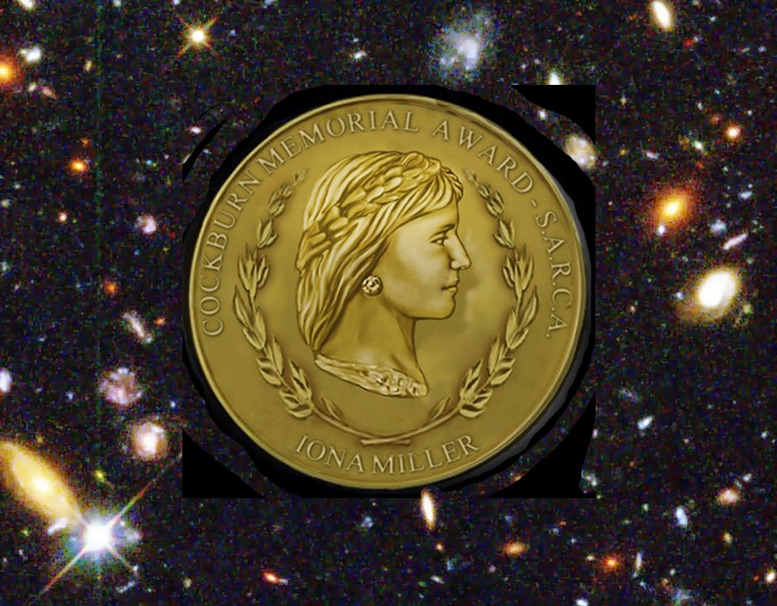
Iona Miller, Science-Art-USA & 2015 Cockburn Memorial Medal Laureate

http://ionamiller.weebly.com/science-art-2015.html

Picture
http://ionamiller.weebly.com/manifesto-2014.html
Picture
Art Manifesto 2014
The Sacred & Banal
Where is the Sublime in the Age of Bread & Circuits?

by Iona Miller, (c)2014

Art, for the most part, is not really “art”, anymore. It is barely decoration. Little beyond "sofa art", most of it can be characterized as “personal display,” with attached monetary value, rather than "sublime". Much of even the lauded art of today has no "secondary market", being usurped by the headlong rush for the next new thing -- the next emotional contagion. How long can the voice of the depths be silenced by tidal waves of mediocrity and fried nerve endings?

Works created in the pioneering days of new media with primitive patches and plug ins look childish in retrospect and are relegated to end chapters in history books, discarded like leftover syntho-pop. Best-practice of those days is now literally child's play. Despite the availability of free information, [and disinformation], Millennials may not even know the points of reference, exemplars and historical figures from the common cultural history earlier generations took for granted as the overtones of humanity's vast journey.

What Feeds & Funds the Soul?

The magic springs from below, from the upwelling creative spirit -- the One spirit deep within. If we want a living, vital art, we must go deep on a quest for something lost and suppressed – something forfeited long ago. We won’t find it in a sterile gallery, or pop ups, or the museum, the art fair, or even within the exploded deconstructed frame, or the curatorial or the archival. Where is the art that helps us discover ourselves? Has not every perverse curiosity for everything barbaric and subterranean already been aroused and sated? We need it not to best the past, but to find our own way forward.

We won't find it in the formulaic retrieval of the electronic, traditional or obsolete -- not even in complex visual harmonics, or the saccharin sentimentality of typical new age and psychedelic works, nor in the true-grit of underground scenes. They might reflect what's happening, but they cannot reveal what's coming or how we might deal with it. 

We won't find it in the painfully precise mechanical renderings of 3D printing or films, nor in other soup-of-the-day "peacock" technological displays, nor in the empty reflective observations of pop art, which pepper our lives in a non-stop assault of virtually meaningless mixing and remixing.

We certainly won't find it in the vapid imagery barrage of social media, where even the best image has a half-life of nanoseconds, even if it goes viral. According to the inverse law of networking, the more trivial it is the more shallow attention it will garner.

What separates the memes from the memorable, the nuanced from the derivative? What can inspire us to gain ground? Where are the clues that can help us awaken from dissociation and remember where we came from? Certainly not through art that requires a sustaining narrative root but is the hybrid equivalent of sterile GMO seeds.

How else can we hope to become more fully human? Do we have to blunder into redemption? Dare we even use such a term, when such work may not be beautiful or pleasant. Perhaps it can only appear in a certain state of the soul. Could the alchemical and transformative come as Jung describes? "[W]hen the God appears to us we are at first powerless, captivated, divided, sick, poisoned with the strongest poison, but drunk with the highest health. Yet we cannot remain in this state, since all the powers of our body are consumed like fat in the flames." Gold never has to prove itself.

We have played out all the familiar tropes and buzzwords; they resound like tinplate notes from an old pianola. All archetypes are stripped bare. Every theme has been hacked, sampled and re-hashed -- mined out from the nascent to the apocalyptic. Long-revered symbols have morphed into icons of globalist supremacy and lost or reversed their "charge". Meaning has inverted into its opposite in a global pole-flip. The Abyss stares back coldly through deadened eyes radiating recycled electrons.

Sacred Nature

Nature is inside us, permeating our cells; but we've lost sight of its rhythms and patterns, or reduced them to sterile algorithms. We ignore Nature at our peril. A long time ago, art was a primordial, sacred expression of a world saturated with supernatural mana and deep meaning.

Mankind looked toward the stars and dared to dream culture into being. Art was direct revelation, and in that sense sublime. Art illuminated our sense of unity with the Cosmos, capturing a bit of microcosmic magic. It helped us find our way forward through the dark mists of approaching events and upheavals.

Later on, art became part of Empire’s self-congratulatory pageantry and pomp. Then it was woven into Renaissance science; the discovery of space and representation. With the rise of bourgeois culture, art became a philosophical instrument, undermining the pieties, the smug certainties of Middle Class life.

Modern art was supposed to shock and disrupt. That was its function. Soon, we discovered that these shocks and disruptions did not interfere with or impede the incessant flow of commodities, the seemingly relentless progression of Empire, beating at the zombiefied heart of global life.

Art’s destabilizing spectacles and broken reflections fed the Capitalist machinery of incessant production and militarization. Art provided an ideological cover for the continual decimation of nature, and the annihilation of traditional cultures. Every effort to break the realm of the aesthetic and finally find something unpresentable, rejected, or repulsive, paradoxically enhanced the filthy, corrupt power of the mega machine.

During the Cold War, writers and artists faced a huge challenge. The Soviet world expected works that glorified militancy, struggle and relentless optimism. In the West, freedom of expression was touted as liberal democracy's most cherished possession. But such apparent freedom carried a hidden cost with a covert agenda.

Weaponized Art

Falsely so-called Intelligence applied extraordinary energy to a secret campaign. Some of the most vocal exponents of intellectual freedom in the West were unwitting instruments -- whether they knew it or not, whether they liked it or not. Art was co-opted by the global secret services and bent to their agendas. Spies became the de facto arbiters of taste, style, and social behavior.

Rebellion was routinized; dissent was channeled. Art was deliberately used for political indoctrination, if not social engineering. http://www.independent.co.uk/news/world/modern-art-was-cia-weapon-1578808.html
http://gizmodo.com/5686753/how-the-cia-spent-secret-millions-turning-modern-art-into-a-cold-war-arsenal

CIA waged a cultural and propaganda war against socialist ideas from the 1940s to the 1960s. They created, funded and ran the Congress for Cultural Freedom, though both bodies always claimed that the CCF was quite independent. They moved through the art world as they had the publishing world.

From the start of the Marshall Plan, CIA got $200 million a year to support various activities, including assassinations, coups, strike-breaking, election-rigging. It set up supposedly independent magazines, festivals, and organizations. In the name of Empire, art was efficiently absorbed into the disintegrating spectacle. The banal spectacle became the norm, as it had in Rome. Only now it is "Bread & Circuits", with electronic gadgetry as the cultural carrot.

The artists who played the game effectively – titillating the bourgeois just enough – mastered the game of private capital accumulation for themselves. They retired to Bavarian castles, Brooklyn lofts, and East Hampton mansions, surrounded by their fawning devotees. A less-affluent contingent fled to Europe, even Berlin, to escape the soul-crushing effects of consumer-driven art. Everybody agreed to the rules of this cynical pantomime, and all was fine for a while.

Then the Know-Brow revolution overturned both High-Brow and Low-Brow art and experimentation with a technological revolution that has resulted in a final blow to art as it has been known throughout the ages. Art has been reduced to an egalitarian pursuit where anyone with a laptop or phone app can create multimedia marvels. But what do they have to say that hasn’t been said? The real story of the truly creative artist with a Vision and a Voice still calls from the wilderness – the hinterlands of the psyche.

We are subjected to philosophical, religious and political propaganda continuously. Culturalization colonizes us at the belief system layer of psyche and infects our self talk and self-image from birth forward. The same process happens at the national and multinational level. People are controlled and manipulated through their belief systems, often based on the most outrageous primary assumptions about how things work. But what if they/we are completely wrong? Our beliefs condition how we think, feel and act.

But our beliefs are recursively conditioned by centuries of cultural programming and mythic patterns that control and manipulates entire populations, socio-politically and spiritually. What if your most cherished beliefs about your spiritual life were undermined with less glamorous revelations about the manipulation of human nature? Why do we seek Truth, and more importantly, why do we seek it outside ourselves in some mysterious authority or mystical signs?

We have to learn how to stop gobbling down propaganda, consumerism, and phony beliefs and make ourselves immune to such manipulation because the onslaught is virtually relentless. Why is the Information Age riddled with gurus? Different classes of belief diseases poison not only what we think, but also HOW we think. Our beliefs about belief are the deeper problem.

We need to build our psychological immunity to such psychotropic infections with DIY mind control. Organized arrays of opinions on economics, philosophy and theology battle for our human minds, seducing and then abandoning us when their false promises fail to manifest. But perhaps if we believe we can, we can solve the problems we claim are unsolvable because of our stupefication, without resort to “higher powers”. We have to focus on what these arcane and banal beliefs deflect us from thinking about, learning to cope without mental crutches. Propaganda misdirects our attention down a dead end path.

Nobody controls anything. It's so complex, everything affects everything else, and we can't anticipate, plan for, or escape it all, despite our intentions or the quantum-mind magic buzzword, "intentionality". Perhaps we seek a domain of control of our lives and health and futures precisely because we feel so OUT of control. We see the flux of chaos and sense the fear and pain in its wake.


Who Calls the Tune?

Who calls the tune for today's "artists"? Anyone with a smartphone can make Selfies, tweeked with apps that do all the creative thinking and create the result at the click of a button from a list of preset options. The same goes for cobbled video production, which arguably has made great strides from the days of Nam June Paik. The best that can be said about such even "happy accidents" is that it helps get outside what is inside in some form of expression. But is it art? Hardly.

Again, canned art is predictable and serves only the panoply of spectacle in the landscape dominated by a Bread & Circuits mentality of disposable entertainment and electronic carrots. High-end multi-media now requires formidable teams of expensive production specialists whose skill-sets are constantly obsolesced by new crops of up to date nameless young Turks. Thus, it falls into the realm of Big Business.

But for the multimedia revolution at our fingertips, we might have gone on forever, patting ourselves on the backs for our little academic exercises in avant-garde-ism, but unfortunately – or, perhaps, fortunately – we now are forced to realize that our entire system – not just the art system – is a con game, a Ponzi Scheme.

Empire mortgaged the future of the Earth for short-term gratifications, for narcissistic celebrations. The gilded shark tanks and massive arena shows no longer help to justify Capitalism’s incessant omnivorous expansion, as the climate shatters and the Sixth Great Extinction proceeds.

Postmodern art gave form and expression to the contemporary religion of nihilism. In this way, it meshed perfectly with the Totalitarian project of the New World Order, the perfected surveillance state. In a nihilistic universe, the Ego reigns, for one transitory moment, floating above the void.

Art became a world of cut-ups, samples, and infinitely re-cycled tropes. Now it is being expunged from the core-curriculum, replaced by a host of toys that trivializa and routinize creation and the zealotry it takes to carve beauty by hand from solid stone. Children are not even taught cursive writing beyond Grade 2. Are we to applaud mediocrity as if it carries meaning? Reflecting a vapid culture hardly raises the bar. Time is spent learning new tricks, rather than producing quiet or resounding splendor, or even soul-searing depictions of despair.

Albert Camus realized, in The Rebel, only two worlds are, in the final analysis, possible for the human mind: The world of rebellion or the world of the Sacred. We can no longer bear to perpetuate the antiquated, repetitive, exhausted modes of rebellion. This must mean, by process of elimination, we are beginning to toggle back toward the world of the Sacred, if Camus was right.

Could the realm of the Sacred reemerge in the midst of our desacralized postmodern wasteland? It would be the final outrage, the last shock.

Intention is a powerful idea, not just airy-fairy wishful thinking. What is the intention of our current civilization? What is the intention of the little particles of individuality swarming around in it? What is the intention of the artist who still understands that their discipline offers an intuitive apprehension, a window on the future, on new environments?

Shamans were the first artists. Eastern mystics, esoterics, and shamans agree there is only one consciousness that expresses itself through the creative medium of space and time. This consciousness fragments itself into myriad tiny shards in order to learn about its own expressive capacities.

If this view is correct, then the intention of civilization should be to mesh all of these fragments back together into a harmonic, ever-changing whole. We could explore universality in diversity, and overcome the false dualism between the individual and collective by reimagining our world as a collaborative work of art.

Can we trade comfortable lies for unpleasant truths? Can art lose its separate identity as an ornament of bourgeois culture and becomes intrinsic to a social world based on creative expression and improvisation, just as technology and nature weave together in a new synthesis?

Nam June Paik thought so early in the information age: "Our life is half natural and half technological. Half-and-half is good. You cannot deny that high-tech is progress. We need it for jobs. Yet if you make only high-tech, you make war. So we must have a strong human element to keep modesty and natural life."

Inspiration should be a verb, not a noun; it is a complex dynamic, a force of Nature and our nature.  When someone asks me what “inspires” me and my artwork, I can’t imagine naming any one thing, or list of “things”.  It’s like asking my favorite color.  I can’t help but answer, ALL, “all of the Above…and Below”. 

What doesn’t inspire the artistic eye that doesn’t merely “look at”, but “sees through” to the imaginal depth of any given perception or experience?  Rather than the impressionistic senses informing the soul, the soul informs the multisensory experience of being. Inspiration means life, the opposite of death. It implies purpose, direction, meaning, ecstasy, creativity.

Any moment can be as inspirational as the next.  Inspiration can come from an internal movement or sensation, a love affair with color and form, the awe of an incandescent moment, even the pain of a soul on fire struggling to express itself or the zeitgeist of the times. All ways of looking at reality are imaginative. When we see soul as the background of all  phenomena,  we become aware of the animating principle.


The Sublime

Art, today, can prepare the ground for that leap in consciousness and civilization that is so urgently necessary. It can help to heal the culturally imposed divide between humanity, nature, and the cosmos. We simply cannot predict how it will do so -- perhaps through prophetic dreams, where we can tap our common roots.

In aesthetics, the sublime is the quality of greatness beyond imitation: physical, moral, intellectual, metaphysical, aesthetic, spiritual or artistic. Edmund Burke’s Philosophical Enquiry (1757) connected the sublime with experiences of awe, terror and danger. Burke saw nature as the most sublime object, capable of generating the strongest sensations in its beholders. This Romantic conception of the sublime proved influential for several generations of artists.

The sublime is ineffable. Sublimity is historically a romantic notion. Sublime experiences, whether in nature or in art, inspire awe and reverence. An emotional understanding transcends rational thought and words or language. 

In “Critique of Aesthetic Judgment,” Kant discusses aesthetic experience and judgment of the beautiful and the sublime, and also artistic creation. He pondered whether sublimity is restricted to objects of nature, or whether there can also be sublime art.

Before the Romantics, the sublime was normally related to traditional religions. For Romantics, the sublime is a meeting of the subjective-internal (emotional) and the objective-external (natural world): we allow our emotions to overwhelm our rationality as we experience the wonder of creation and nature. The sublime is deeply experiential and can shake one to the core.

In the 1st century, Longinus described the sublime as great, elevated, or lofty thought, art, or language, particularly in the context of rhetoric. An inspired aesthetic, the sublime evokess awe and veneration, with great persuasive powers. He speaks for the art of the sublime, and names several characteristics.

The sublime requires:
  • High thoughts;
  • Fervent passion
  • Greatness of soul
  • Sublime and worthy images
  • Harmonizing elements,
  • Amplification
  • Elevation
  • Emulation as inspiration
  • Powerful Images
  • Poetic Images
  • Persuasive Images
  • Smooth connections

"It must needs be, therefore, that we shall find one source of the sublime in the systematic selection of the most important elements, and the power of forming, by their mutual combination, what may be called one body," Longinus claims.

Though we may not understand how the pieces fit together for quite some time to come, we need to remain open to the inspiration of genius that has fed great art through millennia. We are facing unprecedented challenge as a species.  We turn to film and art to help us contextualize experience, personal and collective.  As Francis Bacon said, “The job of the artist is always to deepen the mystery.”  In this way we deepen our relationship with Nature and Cosmos.

State of the Heart

Art connected to Source and the zeitgeist of its times has a living taproot in the matrix of evolution. Our works "work" when they work themselves through our culture, based on that culture's underlying psychological need. They become meaningful if perceived as carrying revelatory weight that somehow illuminates our collective lives. They may not be "true", but good things come of this generative vision, reaffirming and celebrating our humanity.

To be art, it just has to be significant, reflecting or steering culture. As artists, we use our own experiential vision to create perceptual embodiments in our medium of choice. We can still take a fresh look at the world, inspired by the entire spectrum of human artistic endeavor, without resurrecting or imitating the past, but taking it that strategic step further with contextualized elements.

We have attained a degree of technological sophistication to open most, if not all, of the new realms to the creative process. Unexplored media in the quantum paintbox include truly tactile virtual reality, and various levels of induced altered awareness, such as hypnosis or natural trance. They assault as many of the senses and emotions as possible in order to break open the door of the five senses and drive our audience into the infinitude beyond, newer vistas of participatory experience and expression. Artists are already designing new bodies, new senses, and synthetic environments.

Higher art must be intensely personal while being universal and universally accessible. It must show refined knowledge, understanding and respect for the art that has come before to enrich those around us. Much the same can be said for an artfully and heartfully lived life. We can apply a similar strategy to our spirituality, drawing on the best of what the past offers while keeping our practice and service contemporary and relevant. Our lives become multidimensional artful expressions without frames, embodied in living Light. Process-oriented spirituality is eclectic and intensely personal.

The connection we have with the inspirational Source that nourishes creative life is the same source that sustains our spirits and funds our compassion. It is a deep well from which we can drink at will, the abundant lifesprings of our essential being. The Romantics, arguably beginning with Blake, turned art into a kind of substitute for religion. The East emphasizes a mystical-magical orientation, the West a humanist-rationalist POV. Romanticism is an essentially gnostic spirituality, a Mystery religion.

Now there is no intergenerational priesthood to have our visions for us; we have them for ourselves. Rather than anti-scientifically considering cognition and technofacility an anti-artistic dirty little secret, digital art and multimedia embrace the fusion. There is no Romantic terror of human cognition. Knowledge is power...over yourself. Mind your mind; control yourself with self-awareness and self-responsibility. There is no artificial distinction between the pursuit of knowledge and self-knowledge and aesthetics. Beauty is an affair of the heart but speaks to our whole being.

Art As Meta-Syn

The function of the contributing artist is ‘pathfinding,' not just creating another pretty or more shocking picture, nor contributing to the glut of recycled commercial imagery that plagues our senses. Creating tangibles from the depths, which truly move us, which speak to us collectively, is another gift altogether. It is work that ‘says something'.

Art has a certain healing or negentropic capacity, the capacity to counter the entropic energies of social breakdown, decay, and meaninglessness.   In this sense, great art – authentic art -- feeds us, as it has fed mankind from the earliest times.

Art can be therapeutic, both in the process of creation and for the viewer who reacts from personal associations. Art bares the soul, and provides a container for unbridled self-expression. High synergy is a differentiating characteristic of the nonagressive and secure. Beyond synergy is negentropy, the flow of creative connection with Source. Symbolic art has both an emotional and cognitive content. Metaphysical art draws on the multicultural iconography, not only of the globe, but of the Beyond. At its best it embodies and reveals the indomitable human Spirit.

Any therapist knows that the stories they hear from most of their clients fall into very few, quite typical tales. What we need are bigger stories to guide us in our complex world. We can enlarge our perspective from the individual to the global through “bigger stories”, such as those from our wisdom traditions.

Mythopoesis means literally, "myth-making," the natural expression of the visionary wisdom inborn to the human species (Lash, et al).It is a creative act of story-telling or narration, by which human beings "track" their experience and orient themselves to the cosmos at large. Metahistory is a guiding narrative for human potential, rather than an interpretation of events. The cross-cultural metastory of the human species is an overarching view of past, present, and future. It opens a path toward participation in a story that leads beyond history, a mythos to guide the species.

REFERENCES
http://en.wikipedia.org/wiki/Nam_June_Paik
http://carljungdepthpsychology.blogspot.com/2013/01/i-want-to-emboss-you-like-coin.html

http://www.planetaryculture.com/intentional-arts/
Picture
THE WIZARDS OF AHS
Subculture Shenanigans
Curating the Psychedelic Cognoscenti: 1966 - 2020
Psychedelic & Neo-Psychedelic Scenes & Zines

http://ionamiller.weebly.com/hyperdelic.html

by Iona Miller & Morgan Russell, (c)2013

With an aging boomer generation in its golden years, the curation of the history of the psychedelic revolution and ensuing scenes takes on a poignant urgency. The Underground was the matrix of numerous scenes and revivals that are still highly influential in society today, though their magic moments have come and gone. While each of the psychedelic luminaries and cyber-pioneers have their own press, an overview of some of their former and current activities highlights the arc of these rainbow warriors from many walks of life. No one has written a comprehensive overview that links the agendas of various geographically separated groups into a coherent integral overview, spanning the interactions of West Coast, East Coast, Europe, Hyperspace, and the Virtuality.
From "Dodge City" to "Quail House", from "Silicon-Alley" to Miami Beach, and Beyond

Picture
MANIFEST DESTINY MANIFESTO:
Healing the Soul of America
Applying Therapeutic Technique to Our National Dysfunction

by Iona Miller, 2008,
http://ionamiller.weebly.com


5.08 OpEd Vision Statement ~ Red, White, Black & Blue
published in Paranoia zine's annual, HUNTERGATHERESS, Vol. II, Oct. 2008

and
SPIRIT OF THE TIMES, Issue #7, Australia, Sept. 2012

http://ionamiller.weebly.com/manifesto-2008.html

Picture
ART MANIFESTO by Iona Miller, 10/2007
http://ionamiller.weebly.com/presto-manifesto.html
PRESTO MANIFESTO
Picture
SUB ROSA:
Intelligence as Performance Art
Iona Miller, 2007

2007 - The Year of Living Dangerously
007 ART MANIFESTO by Iona Miller
Io Art Manifesto 2007

http://ionamiller.weebly.com/2007-manifesto.html
SUB ROSA:
Intelligence as Performance Art
or
How I Learned to Stop Worrying and Love the CIA


Picture
DIGIOSOPHY ART MANIFESTO 2006
DIGITAL UNIVERSE:
SCIENCE-ART MANIFESTO 2006
New Media Morphs the Memescape

http://ionamiller.weebly.com/manifesto-2006.html
By Iona Miller 2/2006
From Global Village to Chaosmos

Picture
http://ionamiller.weebly.com/evolutionary-manifesto.html
EVOLUTIONARY MANIFESTO for 2007

Picture
IMAGE STREAMING
A Soulful Exploration of the Creative Mindfield
Part I: Imagination, Part II: Creativity
by Iona Miller, O.A.K., 3-2004

http://ionamiller.weebly.com/image-streaming1.html

Picture
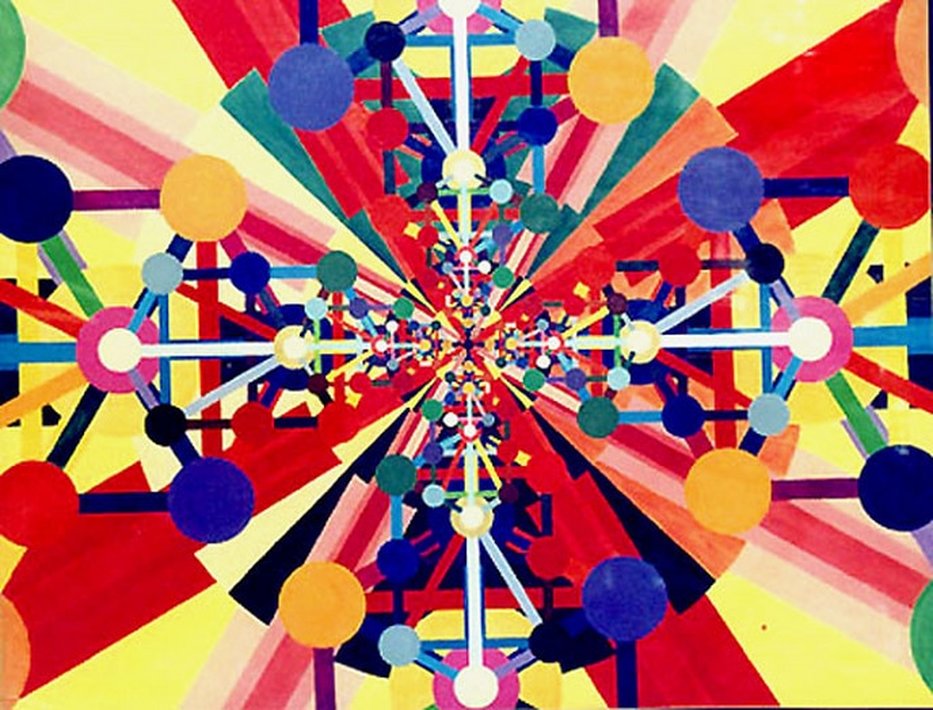
"Qabalistic Cross", 24x36, 1974, acrylic
Paintings
http://ionamiller.weebly.com/paintings.html

Picture
IMAGE STREAMING
A Soulful Exploration of the Creative Mindfield

Part I: Imagination, Part II: Creativity

by Iona Miller, O.A.K., 3-2004


Image Streaming

Summary:
  The image stream or imaginal process is our primary experience and permeates and conditions all facets of human life.  We tend to take the background noise of the constant imaginal flux of the stream of consciousness for granted.  We rarely focus our conscious awareness on this imaginal wellspring, but sometimes it intrudes on consciousness during our gaps in awareness – day dreaming, fantasies, reverie, lacunae, inspiration, discovery.  This slipstream of emergent dynamic imagery is often the subject of psychotherapy and the source of creativity and visionary art.  It is the voice of our Muse, our genius, if we but listen instinctively and respond to the initiatory call. 

Exploration of the soul or mindfield is possible through imagination.  The dynamic mindscape underlies our beliefs, thoughts, feelings, and behavior.  Imagination is both a realm or domain of experience and a human faculty.  Images come in from the outside through our senses, and are also produced autonomously from the unconscious as a perpetual multisensory narrative of experience, immediate though often metaphorical in nature.  Meaningful signals or mental forms emerge from the amorphous background

Creative genius can express a momentary fusion or sustained connection with the unconscious fount of creativity that is then expressed and manifested in some form, dynamic or concrete.  Researchers are discovering the neurobiology of the creative process, including latent inhibition, sleep patterns, temperament, neuropeptides, limbic system and nondominant hemisphere function.  Chaos theory shows how unpredictable forces such as creativity manifest in self-organization within constraint.
 
The world is but a canvas to the imagination. ~ Henry David Thoreau
The world of imagination is the world of eternity.  ~ William Blake
Of the essence of things, of absolute being, we know nothing.  But we experience various effects:
from ‘outside’ by way of the senses, from ‘inside’ by way of imagination
.~ C.G. Jung (CW 7, 355)


PART I:  IMAGINATION

Introduction

We live fully immersed in an invisible vortex of pure hyperinformation, an autonomous stream of imagery, originating both internally and externally.  It is primordial Chaos, the timeless, infinite sea of universal consciousness from which all structure arises.  Images come in from outside through our senses, and are generated internally by unconscious dynamics as an immediate multisensory narrative of experience, often metaphorical in nature. 

For metaphor to elicit nuance it must be fresh, not dead; it must shock the mind into wonder by opening up a gap, an abyss, a void.  The patterning principle transcends and contains all forms.  Imagery is the natural expression of the pregnant void urgently fleshing itself out to the fullest extent.  These images are not ‘ours’, but arise from the primordial mindfield.

This image stream, full of unborn information, is the subject of psychotherapy and the source of creativity and visionary art.  Imagery is an expression of unconscious processing and conversely helps us penetrate unconscious processes.  The images metaphorically reflect the core of our being, the place we have made for ourselves in the world.  They offer deeper insight into our truth, a way of exploring internal and external hindrances to flow and unbroken wholeness.
 
Creative genius can express a momentary or sustained connection with this unconscious fount of creativity that is then manifested in some form, dynamic or concrete.  During flux, many futures exist.  Images penetrate and permeate latent networks operating outside the bounds of awareness. 

The probabilities of evolutionary transformation emerge from total potential as pluralistic chaos erupts into awareness as motivation.  In the creative process, one path is amplified and chosen.  Its essence is evolutionary, following nature’s lead, based on intensification of consciousness. It takes clarity in science and art to see what no one else has ever imagined.
 
Art, like science, is a vocation or calling, a path toward truth and self-realization, for both maker and spectator.  Revolutionary art and visionary physics are both investigations into the nature of reality, and the organization of our perceptions.  Gauguin said, “There are only two kinds of artists  -- revolutionaries and plagarists.”  Revolutionary work marks a transition in a civilization’s worldview.  Arguably, today that marriage of art and science is embodied in new media: digital and electronic arts.

Art helps us remember who we truly are, who we will become.  Information is infused by resonance through direct experience, evoking creative ideas, feelings, and motivated behavior.  Interactive art functions in a similar way as dynamic experience.  It unpredictably seduces and surprises, shattering pre-existent notions.

Imagery unfolds as self-revealing visual or multisensory narrative.  It attracts – even commands -- our attention, consciously and unconsciously.  It invites entrainment through ‘recognition’, providing the energy for follow through in the creative process.  We are stimulated, emotionally charged or enflammed, and respond to it intentionally, even compulsively.  It drives us.

When we believe in and follow that impulse, what was pure potential crystallizes waves of psychophysical energy and becomes manifest.  Each image emerges from the creative context that links all events, real and imaginal – the underlying destructured phenomenal field – the meaningful void of the transcendent imagination. 

Venture in the Slipstream

Arieti (1967:337) tells us that "the creative process consists of an unconscious animation of the archetype."  This animation consists in a transformation of the fearsome aspects of archetype and dream into creative fantasy in the waking world (Gowan, 1975).

Some of us are more acutely aware of the imaginal, more open to the reflective instinct.  The perpetual stream of consciousness is undergird by a dynamic flux of multisensory imagery, which springs from the creative fountain within us all.  We imagine rather than perceive images.  Images are a dynamic meld of multimodal textures. Imagination itself has an intermediary status between the physical and conceptual level of spirit. 

Morphing images are the only reality we apprehend directly.  When we look at fantasy images we see the face of instinctual libido staring back at us.  Fantasy is an imaginal activity that is the flow of psychic energy.  Image and meaning are identical, embodied perpetually in the dynamically shifting image stream.  The entire image conveys its own mood and meaning instinctually and does not require analysis or interpretation. 

Images only relate indirectly to external reality.  An image carries its own inherent meaning which is sort of a ‘condensed expression of the psychic situation as a whole.’  Further, ‘the image is an expression of the unconscious as well as the conscious situation of the moment,’ according to Jung. 

Images are self-revelatory.  Imagination is a direct expression of psychic life.  Imagination flows forth from the imaginal field continually, self-organizing its multisensory narrative and conditioning our experiences.  In fact, this imaginal dimension is our experience.  Everything we perceive of ourselves, others and world is filtered through it. 

Psyche is a cornucopia of emergent imagery, spewing forth from the primal fount of creativity, ever born anew with each and every moment.  ‘Images’ are soul, in that it is impossible to experience soul, except through the imagination.  Multisensory images are distinguished from symbols as they are particularized by a specific context, mood, and scene.  Symbols converge in the subtle net or matrix of dynamic imagery.

Imagination has a discrete redemptive and regenerative power.  Exploration of the soul is possible through imagination.  Soul, or imagination, is both a realm or domain of experience and a human faculty.  Imagination embodies the power of transformation.  It can be accessed through obvious imagery, such as dreams, vision and other sensory analogs, or viewed directly in artistic inspiration, psychophysical symptoms, behavior patterns, emotional patterns, mental concepts, and spiritual beliefs.

The realm of soul joins those of matter and spirit by functioning as connective mediatrix. McConeghey (2003) taps into the ancient notion that "perceiving is breathing," to break through the constrictions of usual art "training," freeing the uniqueness of one’s own vision and the soul’s joy in making. The soul is always "seeing" and making images, and images are a natural function of the psyche’s eye. Images are thus the very breath of life and necessary for a vital soul.

Ancient philosophers and Jungians call this personified image making faculty the Anima Mundi or World Soul.  Soul, or the imaginal realm, is the ‘Mother of all possibilities.’

‘The hiddeness and invisibility of an image lies not in the fact that it contains something apart from its appearance, but in its ‘multiple ambiguity of meanings.’  The sensual qualities of an image – form, color, texture – are not copied from objects and they replace reality as in visions or hallucinations.  To put it paradoxically, images are real precisely because they do not correspond to anything in the so-called outer or objective world of our ordinary experience...hallucination (whether physical or psychedelic) pertains to perceptions, whereas images pertain to imagination.’  (Avens).

Jung stated bluntly that fantasy or imagination is reality.  But he meant it on a deeper, far more fundamental level than simple daydreaming.  At the most basic level of psychic reality are fantasy images.  These images are the primary activity of consciousness.  This ongoing fantasy activity, a vital process that Jung states cannot be explained as mere ‘reflex action to sensory stimuli’, is a continuously creative act – through fantasy “the psyche creates reality every day.” (CW 6, 78).

Images are not contained in the psyche, but are the psyche.  We needn’t go to sleep to experience the stream of consciousness emerging from this intermediary world, which lies between the senses and the transpersonal spiritual world.  ‘Dreaming out loud’, artists are able to make this living stream palpable, tangible.  Imagination is tied to the world of sense awareness, both in the sense of perceptual ability and sense of significance.

Into the Mystic  

We can experience this aboriginal level of awareness through mythical and artistic  imagination, which means watching images in the psyche’s mirror.  What is required for this development is the artform of ‘being fully attentive and at the same time relaxed.’  Reverie is conducive to irrational awareness and noticing what comes before us in the inner theatre.

Images ‘mean what they are and are what they mean.’  They embody meaning in the most immediate sense.  Their meaning exists only in their creation while they are created or emergent.  Dreams are not the only images we perceive.  Dreaming continues while we are awake. 

The stream of imagery is ceaseless.  An image includes mood, context, and scene pervading the whole body with experience.  Scent, touch, and taste, as well as auditory and visual aspects constitute the image.  An image commands the immediacy of attention.

‘…An image does not have to contain any symbols or motifs that usually are considered archetypal.  An image does not have to be shocking, freakish, or sick to work.  An image does not have to be emotion literalized (“I felt frightened”).  There do not have to be big affects or explicit emotional words to make one feel the mood in an image or its emotional weight.  Emotion as mood, as textural feel, is given with every image.  None of the overt implications of an image have to be literally evident, because through precisely portraying the patterns, as Jung said, the implications emerge.’ (Hillman,1977).

James Hillman calls the unfathomable depth of the image love.  Love for the image is an Aphroditic or erotic function.  We needn’t worry about ‘inner’ vs. ‘outer’ nor other mental distinctions, which come after-the-fact.

What we need, and what many artists bring to their work, is a form of love for images, which consists of watchful attention or sustained attention – a way of honoring and entering that flow, field or domain.  Through this attention or love for images, we connect with the impersonal dimension of life, which is the source of dreams, myths, tales, art, and religious beliefs and rituals. 

‘One could also say that images possess the character of necessity and inexorability because, instead of reflecting another reality, they signify and image themselves; they are necessarily what they appear to be.  Image is psyche.  To maintain, therefore, with Jung that human reality is primarily psychic and that the image is the primordial and immediate presentation of this reality, means that…they are shaped presences of necessity.’  (Avens:45-6).

‘Imaginal’ is an adjective, sometimes used to refer to the imaginal realm rather than using the noun.  Again, the soul is the imaginal realm.  So that which is imaginal partakes of the nature and quality of the soul by manifesting as image.  An image begins to make sense as we intuit its significance.  Images ‘make sense’ and literally become sensory.  They make psyche matter.

Hillman maintains that the imaginal brings a sense of distrust or shame in its wake, but that “the real shame is that there is fantasy at all, because the revelation of the imaginal is the revelations of the uncontrollable, spontaneous, spirit, an immortal or divine part of the soul, the memoria Dei…The revelation of fantasies exposes the divine, which implies that our fantasies are alien because they are not ours.  They arise from the transpersonal background.”

Hillman feels that images are not eternal but present an eternal quality because all parts in an image are happening at once.  Images function in nonlinear sacred time, not on a logical narrative time line.  Therefore, there is no question of “this happened, and then that happened.”  Actually, all parts are going on simultaneously.  For example, while looking at a painting, your eye may scan different parts at different times, but the entire scene is displayed continually – a gestalt. 

Further, he suggests the actual words of the image to grasp its significance.  He says, “Synesthesia is how imagination images.”  So imagination is a process of cross sensory blending.  An image becomes not what we see, but the way we see it.  Imagination can therefore be defined more closely as the subtle sensing of the prepositional relations among events – dynamic connectivity, or complexity.

We experience fantasies as part of our conscious life.  The unconscious is simply “unawareness of the all-pervasive presence of the imaginal in our so-called conscious life…The numinosity of the unconscious is due solely to its radically imaginal character which must remain invisible to our day-light consciousness.”

Experience of the transpersonal quality of the imaginal realm comes through a clear awareness of the immediacy of being, i.e. the momentary constellations of archetypal images, which are undeniably real.  We are not real if we deny our dependence on psychic reality, which we experience as images.  When considering the imaginal realm of the soul, we are our images.

Imagination is another word for soul, that middle ground where life and meaning merge.  According to Avens “the function of imagination is to make palpable the fact that matter in its subjective (expressive) aspect is spirit, and the spirit, regarded objectively, is the material world.”  Imagination is the realm of sacred psychology, which approaches the gods through imagining and personifying, rather than through explicit ritual, prayer, and sacrifice of a religious orientation.  Likewise, the artist relies on the former process for inspiration.

Imaginal thinking is an experience of patterns or configurational wholes, which provides direct experience of our oneness with outer reality.  Imagination is the primary reality, with a non-verbal logic of its own.  Naomi Goldenberg, (213-4) says, “The task then becomes one of awareness of soul through its own expressions – through its language of metaphor.  Once imagination is recognized as the realm of soul, we need imaginal inroads.”

Imaginal Inroads in Visonary Art  

The creative artist provides such imaginal inroads into realms barred to those who don’t share the visionary gift for opening the doors of perception.  Archetypal Imagination is a ‘visionary imagination’, which is potentially present at every level of human experience, not only in the artistic, religious or spiritual sense.  It means seeing through the outer to the inner essence of things and events to their inner dynamic. 

What we imagine isn’t purely possible, but is psychically real in the dramatic or dramatized form, which is found in the active imagination process.  The content of the experience is psychically real in the sense it encompasses and transcends both perceptual and self-dramatized realities.

The paradox is that active imagination permits a first glimpse of this extra-personal domain, introducing us to the continual flow of imagery so we become aware of it as an ongoing process.  These images add depth to our perception, being latently rich in archetypal meaning.  Sometimes they come to our attention as synchronicities or serendipity, when inner and outer worlds suddenly converge in a meaningful coincidence.

To enter the archetypal region itself, a transcendent or visionary imagination is required.  Through visionary imagination we come to know archetypes in dynamic interaction in every aspect of our lives and perceptions.  They condition all our experience on an a priori basis.  We don’t see them, but see through them.  They are the means, not the objects, verbs rather than nouns, dynamic not static, primordial not secondary constructions.

Archetypal imagining is a discipline of consciousness, which is first visionary, and second provides an orientation in the inner world, in the mindscape.  The visionary state is heightened awareness, a form of attentional shift from the mundane toward the more fundamental dreamworld, which undergirds it. 

Jung described two categories of creativity: psychological art and visionary art.  Primary processes generate psychological art.  Visionary art, according to Jung, "derives its existence from the hinterlands of the man's mind." This second category connects us with the super-human, timeless worlds beyond our conscious knowing; thus, it correlates with the creative process described as fusion. 

When a creator, in any field, approaches this second category, he or she becomes a scout or pathfinder for all of humanity.  The order of choice is so high it appears as chaos.  Exploring new directions, the artist transcends personal fate, and speaks to, and for humankind. Such work is "channeled" through receptive individuals who respond to the collective needs of the race.

Marshal McLuhan, described such people as the "dew line" (or ‘early warning system’) for society at large who capture and express the spiritual meaning of the culture (May, 1975).   He argued that , “the new role of the intellectual is to tap the collective consciousness of the vast multitudes that labour. That is to say, the intellectual is no longer to direct individual perception and judgment but to explore and to communicate the massive unconscious of collective man. The intellectual is merely cast in the role of a primitive seer, vates or hero incongruously peddling his discoveries in a commercial market.” (Theall, 2003:208)

The collective unconscious described by Jung ties the psyches of humanity together; creativity thus includes the expression of the specie's needs, not solely individual need. Creating thereby becomes a function of humanity: the individual, the creative process, and the creation, form a gestalt within the context of a larger "whole." 

An artistic work begins with the process of fusion. An individual artist opens to inspiration and meets the infinite flow previously described. The original work shows a merger of the individual blueprint and the infinite flow. The artistic work reflects the make-up of the artist at the time of creation. It is a conception. However, such a work is primarily psychological art because it is an expression resulting from a stable state or, cumulative life experience.  

Once an artist has found a means of expression, the two forms of creativity become more clearly delineated. After the incipient work develops, the artist expands his or her portfolio by replicating the original work in various forms. The theme of each work may vary but it still bears the blueprint originally present in the artist. It is psychological art, the work of the ego manipulating the medium according to the artist's skills. Such artistic works often go stale over time.

The artist works, and reworks to extinction, the various forms of inspiration to which they were originally receptive. However, in the work of some artists a process of transformation is apparent: this results from a fresh, or continuous encounter with the source of inspirations. It forces change in the artist. This is visionary art, the result of fusion.

Visionary, transformative art results from the fusion of the artist's intrinsic receptive capacity and his encounter with the flow of infinite inspiration -- or infinite potential. Rather than replicating themselves in their work repeatedly, something of such magnitude occurs that it virtually tears the artist's ego apart. 

The deconstructed ego is receptive to new perturbations, new combinations. The artist shifts to one of these new combinations that attracts and bonds with different information and energy flowing through the matrix of the collective consciousness.

The work will have a distinctly new quality that may reflect a complete shift in the life, and the medium of the artist. Visionary creative acts result from the individual creator's willingness to allow dedifferentiation of their individual consciousness and then redifferentiation of consciousness influenced by a different mindfield that changes both the creator and their work.

In Psychoenergetic Systems, (Krippner, 1979), John Gowan draws parallels between creativity, healing, and illumination (or peak experiences).  All three procedures share common traits.  These include a prelude ritual which includes a withdrawal to internal solitude, an altered state of consciousness during the peak of the experience, and an emotional "afterglow" after the experience.  Briefly these are characterized as follows:

               1.  Prelude Ritual.  "This consists of a number of steps, some of which may be left out  or practiced unconsciously in any given case.  First, there is a trigger (a physical problem in the case of healing, an unsolved issue in the case of creativity).  The protagonist seeks solitude undisturbed; one concentrates on one's thought with a fixed purpose, calling or invoking some transpersonal power or must with full expectation of results.  The peak-experience illumination differs only in that the entire process is largely  unconscious."

               2.      Altered State.  "It is far from trance even in the ‘wild’ (or spontaneous)peak-experience.  It is, in the other two modes, far more within conscious control, but it is still not your ordinary state of consciousness, for one is in some measure conscious of the Absolute -- outside time and space.  Once the prototype of the solution is sensed there, it is experienced as vibrations, which grow into mental images, ideas instantaneously flow; they are clothed in a form which must be committed to paper at once lest they vanish, and finally, suddenly, the altered state ends.  In healing, having been visualized by the healer, the perfect condition is manifested in the patient: in creativity the new product has been ‘realized’ in verbal or artistic form; in illumination the experience is ineffable and hence is felt only as overload on the emotions."

               3.  Postlude.  "The postlude experience is one of beneficient emotions, joy, reassurance,  exaltation, oneness, and goodness. ...one or more of the steps may be unconscious or omitted altogether in any given circumstance.  Some of these events are more intense than others, and the spontaneous ones tend to be more ecstatic than those ‘on demand,’ but these statements are equally true of sexual intercourse, for experience breeds equanimity."


PART II: CREATIVITY
Still Crazy After All These Tears  

Scientists have just discovered (2004) one of the biological bases of creativity.  Ignoring what seems irrelevant to your immediate needs may be good for your mental health but bad for creativity. A tendency to be perceptually uninhibited leads to a higher rate of input and unique processing sequences that fan the fires of the creative spirit. 

Rather than becoming overwhelmed, the creative are able to integrate this amplified input and transform it into innovative output.  There is a psychological fusion, which alchemically ‘turns lead into gold.’

“A study in the September (03) issue of the Journal of Personality and Social Psychology says the brains of creative people appear to be more open to incoming stimuli from the surrounding environment. Other people's brains might shut out this same information through a process called "latent inhibition" - defined as an animal's unconscious capacity to ignore stimuli that experience has shown are irrelevant to its needs. Through psychological testing, the researchers showed that creative individuals are much more likely to have low levels of latent inhibition.  

"This means that creative individuals remain in contact with the extra information constantly streaming in from the environment," says co-author and U of T psychology professor Jordan Peterson. "The normal person classifies an object, and then forgets about it, even though that object is much more complex and interesting than he or she thinks. The creative person, by contrast, is always open to new possibilities."  

“Previously, scientists have associated failure to screen out stimuli with psychosis. However, Peterson and his co-researchers - lead author and psychology lecturer Shelley Carson of Harvard University's Faculty of Arts and Sciences and Harvard PhD candidate Daniel Higgins - hypothesized that it might also contribute to original thinking, especially when combined with high IQ.  [Research suggests] creativity increases as IQs climb to 130 (the average score of Harvard students), and even up to 150."  (Cromie, 2004)


These researchers administered tests of latent inhibition to Harvard undergraduates. Those classified as eminent creative achievers - participants under age 21 who reported unusually high scores in a single area of creative achievement - were seven times more likely to have low latent inhibition scores.

“The authors hypothesize that latent inhibition may be positive when combined with high intelligence and good working memory - the capacity to think about many things at once - but negative otherwise. Peterson states: "If you are open to new information, new ideas, you better be able to intelligently and carefully edit and choose. If you have 50 ideas, only two or three are likely to be good. You have to be able to discriminate or you'll get swamped."

Neurobiology of Creativity 

William Calvin (2004) from the University of Washington reports that highly creative individuals have increased expression of specific serotonin transporter and dopamine receptor genes. Creative individuals have significantly higher activation in the right and left cerebellum, frontal and temporal lobes, while they perform creative tasks.

While standard IQ tests and college entrance exams focus on convergent thinking, i.e. finding the right answer, creative individuals excel at divergent thinking, i.e. discovering multiple potential solutions. The typical behaviors of creative individuals, such as novelty seeking and harm avoidance, as well as high emotional, sensual and physical over-excitability, often result in the abandonment of projects.

Increased expression of specific serotonin transporter and dopamine receptor genes does not always transfer into the same kinds of outward behavior, resulting in behaviors that can be said to be specific to creative individuals. That's why creativity tests rarely rely on psychological profiling of "typical behaviors."  The so-called ‘artistic temperament’ actually comes in a variety of ‘flavors.’

The biological parameters of creativity do not necessarily predict temperament.  Highly creative individuals can be found across all segments of the Meyers-Briggs and other psychological profiling tools (Miller, 2004). That's why researchers such as Teresa Amabile recommend the kind of creativity testing that actually requires that the testee produce some output that can be evaluated as creative or not.

A great opportunity for neurobiological research into creativity would be to discover the whole range of ways in which the highly creative people of various personality types express their creativity.  As Anais Nin said, “We don’t see things as they are, we see things as we are.”  The creative move more fluidly between the domains of intuition, thinking, feeling, and sensing.

Creative people holistically use both introversion and extroversion during their process, use both mind and feelings often simultaneously in concert, and are certainly intuitive and artistic, often sensual virtuosos.  They illustrate that the “opposites” do not exclude, but compliment, each other.  For example, they may be introverted in the incubation stage while extraverted in the performance or presentational phase.

June Singer (1973) summarizes Jung’s theory of extroversion and introversion: “The introverted nature is Platonic in that it is mystical, spiritualized, and perceives in symbolic forms, while extraverted nature is Aristotelian, in that it is practical, a builder of the solid system from the Platonic ideal.  The introvert is directed primarily toward an understanding of what he perceives, while the extravert naturally seeks means of expression and communication.  In the introvert, the subject, his own being, is the center of every interest and the importance of the object lies in the way in which it affects the subject.”

“In the extravert, the object, the other in and of itself, to a large degree determines the focus of his interest.  The introvert’s interest in self-knowledge prevents him from being overpowered by the influence of his objective surroundings.  The extravert has a tendency to abandon concern for himself to his interest in others.  Hence the concern of the introvert is in the direction of development of his individual potential while that of the extravert is more socially oriented.  The introvert tends to set himself and subjective psychic processes above achievement in the public domain, while the extravert seeks the recognition of others as a predominant value.”

All types have the capacity for creativity but tend to express it differently.  Some use the mediums and forms recognized socially as “art.”  Others are conceptually creative or more subtle in their creative expression.  Their creativity is part of the fabric of life, of living.  For some the interpersonal, social or economic arenas are their medium.  In this sense, “art” is not defined by the medium but by the artfulness of expression.  There is a harmony of artforms, mediums, and styles of presentation with the primary types:  Dionysian, Epimethean, Promethean and Apollonic.

A quick overview of the spectrum reveals a harmony between certain types and modes of expression: Epimethian artificers (SJ), the sensual Dionysian artisans and virtuosos (SP), singers, performers and composers (SF), Promethean inventors and conceptualizers (NT) and writers (NT or NF authors depending on subject and genre, non-fiction or fiction), and Apollonic (NFs) whose medium is people, acting, or people-helping such as healing.

The four main types of temperaments encompass sixteen subtypes, based on four pairs of preferences: Extraversion (E)-Introversion (I), Sensation (S)-Intuition (N),  Thinking (T)-Feeling (F), Perceiving (P)-Judging (J).  Some people have a combination of two types or a balance along one or more continuums, creating an X-factor, which yields an additional 32 mixed types.  Along the J-P dimension, those stronger in judging display convergent thinking, while perceivers use exploratory, divergent thinking. 

All creative people are flexible in their mental processes, paradoxically wielding the opposites, even the ‘superior’ and ‘inferior’ function.  This may relate to global thinking (NT), activating both left and right hemispheres of the brain (T-F), perceiving new interrelationships (iN) as well as deploying critical (J-P) and expressive (S) capacity.

Divergence, so important in creativity, actually has two components -- fluency and originality. Fluency is the ability to come up with lots of potential solutions. Originality is the ability to come up with potential solutions that are substantially different from each other yet are still part of a potential solution set, will still solve the problem.

Hartman (1973:67) notices personality relationships with dreaming. Worriers require more dreamtime sleep. But this is also true of "tortured geniuses" (1973:68) for "certain very creative, concerned persons, both in art and science, often are long sleepers."; "an increased sleep need is associated with intellectual and emotional work" (1973:78).

A good eight hours of refreshing sleep daily therefore facilitates problem solving and creativity.  Research shows sleeping brains continue working on problems that baffle us during the day, and the right answer may come more easily after eight hours of rest. A new (2004) German study is considered to be the first hard evidence supporting the common sense notion that creativity and problem solving appear to be directly linked to adequate sleep.    Jan Born, who led the German study, said the results support biochemical studies of the brain that indicate memories are restructured during sleep before they are stored. Creativity also appears to be enhanced in the process, he said. The changes leading to creativity or problem-solving insight occur during "slow wave" or deep sleep that typically occurs in the first four hours of the sleep cycle, he said.   What's New with My Subject? Unpredictability In Creativity   There is a chaotic element inherent in the creative process.  Chaos theory suggests the interface of randomness and order is where self-organization emerges spontaneously as surprisingly new order.  Creative ideas will always remain surprising or startling; unpredictability is inescapable. Devotees of the humanities expect to be surprised.  

Collier (1972, p.109) speculates that, “genuine, powerful symbols cannot be deliberately or self-consciously produced; they can only be discovered in the unselfconscious involvement with the developing image.  It seems that symbols develop from, and allude back to, those modes of apprehension which we attribute to intuitive or unconscious sources.  Consequently, there is a degree of ambiguity or unintelligibility about the more powerful symbols for they are born from the deeper regions of the self, from beyond the fringe of reason.  They give intimation of a meaning beyond the level of our present powers of comprehension.” 

An arresting metaphor, or poetic image, an unexpected twist of plot, new media, novel style of music, painting, or dance are all unexpected and therefore delightful.  But their creative triggers cannot be anticipated or foreseen.  The human mind and experience is richly idiosyncratic, full of artful ambiguities.

Chaos theory has shown us that emergent order is always unpredictable though deterministic or bounded by constraints.  The complex inner landscape can be mapped with the features of phase space, stability, chaos, and cascades of supercritical change or junctures.  Creativity emerges as ‘controlled accidents’ in the ever-changing context of resonating conceptual spaces, in the gaps of our awareness.

A given style of thinking typically allows for many points at which two or more alternatives are possible--possible, that is, relative to the style.  In chaos theory, this is called bifurcation.  Intentions act like magnetic fields, moving attention toward some attractors or objects and away from others, focusing the mind on some stimuli in preference to others. 

Once a system is perturbed, by a hunch or inspiration for example, the change gets pumped up to global dimensions in the ‘butterfly effect.’  Diverse reactions and motivations ensue.  A small impulse or resonance with the flow state becomes a creative insight, inspiration, or drive.

Scientists, too, appreciate the shock of a new idea--gravity, the double helix, the jumping gene, periodic table, or benzene-ring. Indeed, unpredictability is often said to be the essence of creativity. But unpredictability is not enough. At the heart of creativity lie constraints: the very opposite of unpredictability. Constraints and unpredictability, familiarity and surprise, are somehow combined in original thinking. (Bowden)

Jung felt a minimum of order was necessary to have a meaningful relationship to imagination.  The minimal ordering system expresses the relationship among archetypes in a sort of archetypal topography, or internal map.  There is a subtle network or matrix connecting all potential symbols and images through a complex system of relations or correspondences.  The psyche is full of dynamic feedback loops.  No image is unrelated to others in this vast webwork.

Bowden contests that an adequate account of creativity should clarify the "how" in the creative impulse. It must show how creativity is grounded in constraints, and why it is that creative ideas are unpredictable--and often inexplicable even after they have occurred.  To discard all constraint destroys the capacity for creative thinking, though randomness contributes to creativity.  Those who are highly creative in their media or fields of expertise seldom make breakthroughs in other areas, though scientists, for example, may also be artistic.

“To justify calling an idea creative, then, one must specify the particular set of generative principles--what one might call the conceptual space--with respect to which it is impossible. Conceptual spaces are established styles of thinking (sonata form, chess, tonal harmony, pointillism, sonnets, limericks, aromatic chemistry, animation, etc.). Different conceptual spaces have distinct structures, each with its own dimensions, pathways or imaginal inroads, and boundaries.” (Bowden)

The "mapping" of a conceptual or artistic space involves the representation, whether at conscious or unconscious levels, of its structural features.  The more such features are represented in the mind of the person concerned, the more power (or freedom) they have to navigate and negotiate these spaces.

A crucial difference-- probably the crucial difference--between Mozart and the rest of us is that his cognitive maps of musical space were very much richer, deeper, and more detailed than ours. In addition, he presumably had available many more domain-specific processes for negotiating them.

Much as a real map helps a traveler to find--and to modify--his route, so mental maps enable us to explore and transform our conceptual spaces in imaginative ways.  Exploring a conceptual space is one thing. Transforming it is another. In general, novel ideas gained by exploring an unknown niche in a pre-existing conceptual space are regarded as less creative than ideas formed by transforming that space in radical ways.    

Many exploratory and transformational heuristics may be potentially available at a certain time, in dealing with a given conceptual space. But one or the other must be chosen. Even if several options can be applied, not all possibilities can be simultaneously explored.  Choices have to be made somehow.    

Occasionally, the choice is random, or as near to random as one can get. So it may be made by throwing a dice or by consulting a table of random numbers, as in a jazz program, or even, possibly, as a result of some sudden quantum-jump inside the brain. There may even be psychological processes producing novel ideas in human minds.    

More often, the choice is fully determined, by something which bears no systematic relation to the conceptual space concerned.  Relative to that style of thinking, however, the choice is made randomly. Certainly, nothing within the style itself could enable us to predict its occurrence.   

In either case, the choice must somehow be skillfully integrated into the relevant mental structure. Without such disciplined integration, it cannot lead to a positively valued, interesting idea. The schizophrenic's word-salad is not poetry, not any succession of events is a story, nor is every graphic fine art.  There is art that hangs on the kitchen wall, and art that hangs in the Louvre.    

Even flaws and accidents may be put to creative use, developing ideas which are not contrived or thought up. Serendipity is the unexpected finding of something one was not specifically looking for. But the "something" has to be something which is wanted, or at least which can now be deemed desirable and used. Creative events such as these cannot be foreseen. Both trigger and triggering are unpredictable.    

This is so even if there are no absolutely random events going on in our brains. Chaos theory has taught us that fully deterministic systems can be, in practice, unpredictable. Our inescapable ignorance of the initial conditions means that we cannot forecast the ‘weather’, except in highly general (and short-term) ways.

Ottman’s (2004) postmodern reevaluation of genius—that disruption of the ordinary, by artists and writers, that cannot be explained solely in geographical, cultural, or formal terms.  He suggests that while there is no essentialist quality of genius, the postmodern artist can reach the extraordinary by way of an active-passive Genius Decision, which is engaged in an activity of failure in its desire to represent the nonrepresentable.

Collier (1972:51-2) feels that at times the artist "shapes collective experience" and becomes a "channel through which unconscious, universal life forces are expressed and shaped."  He likens art to a magical act. “It is in the creative act, in the construction of images whether they be of science or art, that he gains his independence, sense of purpose, and ability to live with uncertainty and fear.”

The inner dynamics of the mind are more complex than those of the weather, and the initial conditions--each person's individual experiences, values, and beliefs--are even more varied. Small wonder, then, that we cannot foresee the brainstorms of creativity in our minds. 

Possession is 9/10 of the Law of Creativity  

Like fractal patterns emerging on the computer screen, we cannot fail to notice the aesthetic beauty of the unfolding process of the creative imagination.  Creativity is conceived and generated within conceptual and imaginal space and flows outward as emergent process.  It is a personal moment of truth, of ripeness that also has broader social meaning.

Fromm (1959) tell us creativity requires at least four traits: “capacity to be puzzled, ability to concentrate, capacity to accept conflict, and willingness to be  reborn everyday.”  Maslow (1958) extends creative traits to include “spontaneous, expressive, effortless, innocent, unfrightened by the unknown or ambiguous, able to accept tentativeness and uncertainty, able to tolerate bipolarity, able to integrate opposites.” 

We could also add traits of energy, autonomy, confidence, openness, drive, resourcefulness, free-thinking, flexibility, fluency, originality, and a preference for complexity.  Creativity brings in its wake a sense of destiny and personal worth, resulting in joy, contentment and acceptance of self.  This shows its transformative ability, transcendent and holistic quality.

The unconscious, not our egos, is the genius.  Certain characteristics of genius point toward access to nondominant hemispheric (right brain) functioning and transcendental power.  There can be a feeling of being possessed, seized by a power greater than oneself.  This transcendent subliminal self echoes the ‘otherness’ of artistic genius, as Esther Harding (1973:151) points out:

“To the creative artist, his art (or his genius) is like a non-personal creative spirit, almost a divine being, that lives and creates quite apart from his ego consciousness.  While the creative urge is on him he feels lifted out of himself; he is exalted.  Inspired by a spirit breathing through him.  What he portrays is not invented by himself; it comes to him he knows not whence.”

The beginnings of the creative process lie in introspection on information previously assimilated.  This may take many forms, such as focusing on a problem and studying all angles of it, with various repercussions.  After preparation and incubation, an illumination, or answer to the problem may suddenly occur.  Its application will show if it is a true answer, or can be verified as useful.  Creativity is part of the basis of philosophy in that it raises problems or questions, which it seeks to resolve through verbal creativity.

Gowan lists several theories concerning creativity, and the powers and virtues of verbal and mathematical creativity.  He asserts that creativity has cognitive, rational and semantic aspects.  Other aspects of creativity are personal or environmental, or stem from a certain psychological openness.  The inspiration for creativity comes from the ability of the ego to access the contents of the collective preconscious.  Activity directed in this manner leads to high well-being and self-actualization.  Understanding increases along with creative organization.

The creative process may not be emotionally painless, however.  As in chaos theory, a system far from equilibrium experiences complex turbulence which hides a high degree of organization, even beauty.  This may describe part of the make up of the so-called ‘artistic personality.’  In Facing the Gods, James Hillman points out the common identity of Chaos and Necessity with anxiety, which echoes the relationship of chaos and constraint, described here in the preceding section:

“The psychological viewpoint sees Necessity and Chaos not only as explanatory principles only in the realm of metaphysics; they are also mythic events taking place also and always in the soul, and they are the fundamental archai of the human condition.  To these two principles the pathe (or motions) of the soul can be linked.”

“Psychology has already recognized the faceless, nameless Chaos, this ‘sacred and crazy movement’ in the soul, as anxiety, and by naming it such, psychology has directly evoked the Goddess Ananke, from whom the word anxiety derives.  If anxiety truly belongs to Ananke, of course it cannot be ‘mastered by the rational will.’

Prigogine (1984) comments on the so-called consciousness of dynamic systems far from equilibrium:

“Near bifurcation, systems present large fluctuations.  Such systems seem to ‘hesitate among various possible directions of evolution.  A small fluctuation may start an entirely new evolution that will drastically change the whole behavior of the system.  The analogy with social phenomena, even with history is inescapable.  Far from opposing “chance” and “necessity’ we now see both aspects as essential in describing nonlinear systems far from equilibrium.  This is very different than the static view of classical dynamics or the evolutionary view associated with entropy.”

The future of a chaotic system can be substantially altered by a tiny perturbation.  Small disturbances can radically alter a chaotic system’s behavior—but tiny adjustments can also stabilize it.  The same system theory, applicable at all scales of observation, holds true for our personalities and creative process.

Chaos theory is also characterized by phase breaking transitions.  This may be more than metaphorical for the artistic process, as well.  Most of reality, instead of being orderly, stable and equilibrated is fluctuating and boiling with change, disorder, and complex turbulent processes.

Defects play an important role in the destruction of old order during symmetry breaking transitions.  Phase instabilities are defect-mediated and arguably this holds true for personality.  A disorganized system either disintegrates into chaos or leaps to a new higher level of order or organization.  This psychic turbulence can create quantum leaps in awareness that emerge in surprising new ways of seeing, new themes, media, rhythms, or style. 

In the cult film, Eat the Sun, the Videru Telemahandi teaches that “the ecology of the soul is to recycle one’s consciousness”, and the artist does just that.  The artist helps us re-embrace chaos in our culture.

Conclusions  

'By Names and Images are powers awakened and re-awakened'. ~Golden Dawn

Creative personalities are easily recognized by their child-like playfulness and adult discipline.  They are not immobilized in their aspirations by a guilt-ridden relationship to their unconscious, seek mystery and surprise, can tolerate and even encourage disorientation and confusion, and defy explanation. 

Likely to be more sensitive than most to internal and external stimuli, the creative have a certain attunement to and comfort with the interplay of extremely intense conscious and preconscious drives and motivations, paradox and duality.  We all can make ourselves available for the spirit of life and ride on its breath, interrupting our habitual patterns.

It has been said that “Art is an articulator of the soul’s uncensored  purpose and deepest will.” (McNiff).  Echoing its shamanic roots, D.H. Laurence called art an essentially religious activity.  It evolved from the quest for the sacred, from the instinct for play and tinkering, not as a utilitarian pursuit.  Imagery is the door to the deep self, the compositional world of rhythm, tone, texture, color, mood, drama, and above all -- surprise.

The creative process arouses and animates us, remaining the most dramatic shortcut to discovery of the secrets of nature and our nature.  It requires intuition, commitment, brinksmanship, discernment of the relevant and irrelevant, love and discipline.  Through the spirit of play, without expectation that it will mean anything, we get to the essence of things.  We transcend our self-consciousness, work through the central metaphors, persistent themes and moods of our lives.  Our art speaks from the heart of meaningful connections.

The subjective inner domain is intimately conjoined with  the external objective sphere.  Radical innovations in art often foresee new culture changing concepts, matters which do not yet have words, or are unformulated intellectually.  McLuhan said, “The artist is the man in any field, scientific or humanistic, who grasps the implications of his action and of new knowledge in his own time.  He is the man of integral awareness.” 

In Understanding Media, he conjectured,

“If men were able to be convinced that art is precise advance knowledge of how to cope with the psychic and social consequences of the next technology, would they all become artists?  Or would they begin a careful translation of new art forms into social navigation charts?  I am curious to know what would happen if art were suddenly seen for what it is, namely, exact information of how to rearrange one’s psyche in order to anticipate the next blow from our own extended faculties.”

Artists unconsciously introduce symbols and icons that herald scientific ages still unborn.  The significant artist is a precursor who prepares the culture for transition to the future. Works of exceptional artists can be evaluated by how they reveal anticipation of the future. 

To think about things in a new way we have to begin by assimilating unfamiliar images. 

The post Postmodern era has seen the obliteration of all metanarratives: the deconstruction of form in pomo aesthetics, the deconstruction of matter in subquantum physics, and the deconstruction of personality to groundstate in psychology.  The image is one of  ‘emptying’.

What will come next to fill that emptiness?  How will we know the world?  What things ‘want’ to live together?  It will take form from volume, space, mass, force, light, color, tension, relationship, density, rhythm, tone, and texture with aesthetic qualities, elegance, symmetry, beauty, and grace.  Somehow it will literally ‘make sense’, not in a rational but a direct way.

Creativity has a life, a vitality, of its own.  We are the midwives of that which seeks to be born of necessity from Chaos.  In this way, like the alchemists of old evoking the sacred in their Great Work, we free the spirit trapped in common matter and embody that divine essence which was previously unmanifest and unknowable.  This is the mystery of the creative instinct, our primary calling. 

Nietzsche called art, “a saving sorceress, expert at healing.”  It is a soul-making process of experimentation, risk-taking, absorption, fascination, attunement, flow, a variety of mystical experience which can lift us out of ourselves in rapture and delight, revealing what was formerly hidden.  Creativity supplies its own motivation, impelling us to live more courageously, imaginatively, and playfully.

We are all creative and can become moreso.  We don’t have to wait idle for divine inspiration to strike, but can engage actively in the process of discovery and self-expression of our imagery.  We can improvise and risk, trusting the process that when we answer the call, we will harmonize with the flow by willingly entering and following that mystery.  Fantasies and metaphors bring inspiration to action, heightening experience and opening the way to different ways of knowing self and world.

Attuning and attending to imagination’s kaleidoscopic panoply offers the creative person an endless source of inspiration and discovery.  We can incubate, facilitate, and enliven our own problem solving and creative process by remaining open to internal and external input, taking time for reflection, getting plenty of deep sleep and dream time, and embracing the chaotic idiosyncracies of our own creative process. 

Still, inevitably, the Muse of truly innovative inspiration will visit when she will, unpredictable as ever.  We can only prepare ourselves dutifully to be hospitable when she arrives.

REFERENCES

Abell, Walter (1966). The Collective Dream In Art.  New York: Schocken Books.

Anderson, Walt (1977). Therapy and the Arts. New York: Harper & Row.

Arieti, Silvano (1967).  The Intrapsychic Self. New York: Basic Books.

Arienti, Silvano (1976).  Creativity: The Magic Synthesis. New York: Basic Books.

Avens, Robert (2003). Imagination Is Reality: Western Nirvana in Jung, Hillman, Barfield, and Cassierer, Spring Publications.

Bayles, David and Ted Orland (1991). Art and Fear.  Capra Press.

Bowden, Margaret. “Creativity and Unpredictability”. SEHR, volume 4, issue 2: Constructions of the Mind,  Updated 4 June 1995   http://www.stanford.edu/group/SHR/4-2/text/boden.html

Calvin, William. (2004) “Neurobiology of Creativity” http://www.corante.com/brainwaves/archives/002387.html,  story by Zach Lynch.


Carson, Shelley, Peterson, Jordan and Higgins, Daniel (2003).  “Decreased Latent Inhibition Is Associated With Increased Creative Achievement in High-Functioning

Individuals”.  Journal of Personality and Social Psychology, Vol. 85, No. 3, 499?506, 2003; American Psychological Association.


Collier, G. (1972),  Art and the Creative Consciousness.  Englewood Cliffs, N.J.: Prentice Hall.

Cromie, William (2004), Harvard news article

Fromm, Erich (1959). “The Creative Attitude.” In Creativity and Its Cultivation.  H.H. Anderson, (Ed.). New York: Harper and Row.

Goldberg, Naomi (1975). “Archetypal Theory After Jung”, Spring 1975, 213-214, Spring Publications.

Gowan, John (1972).  Development of the Creative Individual.  Buffalo: Creative Education Foundation.

Gowan, John (1975).  Trance, Art, and Creativity. Buffalo, New York: Creative Education Foundation.

Harding, Esther (1973).  The I and the Not I.  Princeton University Press.

Hartman, E.L. (1973).  The Functions of Sleep. New Haven: Yale University Press.

Hillman, James (1977). “An Inquiry Into Image”, Spring 1977, Spring Publications.

James Hillman, (1980). Facing the Gods. Spring Publications.

Hirsch, N. (1931). Genius and Creative Intelligence.  Cambridge: Sci-Art Publishing.

Koestler, Arthur (1964).  The Act of Creation.  New York: McMillan.

Krippner, Stanley (1979).  Psychoenergetic Systems.

Maslow, Abraham (1959). “Creativity in Self-Actualzing People”, pp. 83-95.  In Creativity and Its Cultivation.  H.H. Anderson, (Ed.). New York: Harper and Row.

McConeghey (2003). Art and Soul. Spring Publications.

McLuhan, Marshall (1964).  Understanding Media: The Extensions of Man.  New York: New American Library.

McLuhan, Marshall (1967).  The Medium Is the Massage.  New York: Bantam.

Miller, Iona (2004) “Profiling: Psychological Types and Temperaments: Understanding the Differences in People”.  Grants Pass: O.A.K.  

McNiff, Shaun (1992).  Art As Medicine. Shambhalla.

Ottman, Klaus (2004).  The Genius Decision:  The Extraordinary and the Postmodern Condition. Spring Publications.

Prigogine, Ilya (1984). Order Out of Chaos: Man’s New Dialogue with Nature. New Yor: Bantam.

Rhyne, Janie (1973).  The Gestalt Art Experience.  Wadsworth.

Shlain, Leonard (1991). Art and Physics: Parallel Visions in Space, Time & Light. New York: William Morrow.

Singer, June (1973). Boundaries of the Soul. New York: Anchor Books.

Theall, Donald (2003).  The Virtual McLuhan.

Wenger, Win (1996). The Einstein Factor. Prima Publishing.


Picture
Picture
Picture
Picture
Picture
Picture
Picture
Picture
Picture
Picture
Picture
Art, Path XIV
Iona Miller

"To our distant ancestors who worked in the silence of the caves some two hundred centuries ago in elated honor of genius never surpassed."  It is significant, I think, that we begin to speak of centuries, as if welcoming these women and men at the boundary of the recent past.  The fact that some of them could execute such paintings, engravings, and carvings is impressive enough in itself; but more impressive is the fact that the undoubted majority who could not, evidently could appreciate, even support, those who could.  I can think of no more significant single advance in the whole course of  human evolution; and I can think of no more convincing demonstration of the final, decisive emergence of the utterly distinctive human brain."
--Melvin Konner, The Tangled Wing

Mindful Luminosity
Art originated in shamanism, when man first made imagination into images.  All art is process.  All process is about morphology or process magic, translation from one state or another with or without some specific goal.  Process morphs are metaphors.  Art describes without explaining.  Art imitates life. 

In pathworking life imitates Art.  Processes connect disconnected forms.  What is lost in form (crystalized) can be found in process.
Metaphor is about experience, how we know what we know.  We experience the environment through flowing exchanges of information, matter, and energy.  Through metaphor we can relate what we know to what we don't know.  Metaphor links us with an ocean of interrelated ideas about body-mind-self-universe.

All epistomological metaphors are couched in the language of the senses.  They are drawn from the bottomless reservoir of the sensorium.  On the Path of Return, the path "Art" superseeds "The Universe."  Pathworking is process magic.  Each successive path doesn't transcend the prior path; it enfolds or includes it.  In the same way, the universe imparts its creative process to us.

We, in turn, impart our creative process to the things we create.  Thus, we engage in an internal  dialogue with persons, places, and things through our intuitive constructions.  Our creations reveal the nature of our minds directly and so the universe indirectly.  This is the great current of influences (Middle Pillar) that changes our lives in accord with the holistic changes of the universe.  It relates with us symbolically, metaphorically through what we might call reflectaphors or metaphorms, universally recurrent dynamic images.  Our idiosyncratic expression of these universal forms is art--a means of communicating thoughts and experiences in a mostly personal way.

A metaphorm is an object, image, concept, or process that we compare to something else.  Metaphorms imply relationships between things that we cannnot explicitly compare nor literally equate.  Every object, image, concept or process is a metaphorm.  It matters little whether a metaphorm is literally true or not.  What is important is that it binds our lives to the vast unconsumable life of the universe, giving us a taste of immortality.

All things are intrinsically metaphorms, whether we use them metaphorically or not.  Likeness of form is only one of the likenesses between different forms of matter, energy, or information.  What is lost in form can be found in process.  Regardless of the context in which a thing or process exists, our minds can connect it to something else.  Intuition involves both discovering new connections and innovating new solutions.  This is a synergetic process.  In imagery, figure and ground are given together and complement and sustain one another.

Metaphorming encompasses all forms of metaphor including analogy, allegory, allusion, symbolism, and figures of speech.  Moreover, it can involve all of our physical senses in a synesthesia, implicating every mode of thinking, feeling, creating an identification.  Even visual images can be derived from non-visual sources.  Metaphorms are ways of implying likeness between things, such as the macrocosm and microcosm.

In metaphorming, we transcend the constraints of logic relating from one object to another a new meaning, pattern, or set of associations.  The symbolic language of metaphorms is multidimensional, operating simultaneously on many planes of associations, nuances, and meanings.  Metaphorms invoke the idea of forming, connecting, shaping some thing (or information) in our mind's eyes and hands.

Our brain imposes its dynamics on everything we make--from concepts about the universe to techniques used to test or represent these concepts, from chaos to order.  Process morphs connect us with everything we create and are influenced by.  Metaphorming is a principal means of exploring the world, relating information from one discipline to another, connecting potentially all sources and forms of information.  Metaphorms are expressions of nature's unity.

Science also uses metaphorms.  Physicists are metaphorming when tthey create words or images for describing novel relationships.  If there is no existing word or expression to convey a concept or hypothesis, they simply invent one.  They also use creative visualization.  Visual metaphorms, in particular, inspire hypotheses, and vice versa.
Visual thinking is essential to communicate scientific theory.  Visual models are great aids.  There is a domain of thinking where distinctions between conceptions in art or science become meaningless.  Visual thinking is a criterion for selection between alternatives that resist reduction to logic and are best referred to as aesthetics.

We pursue this path to various degrees of enlightenment.  Thus, art can be considered a state of mindful luminosity.  This luminosity is like the soft, reflective light of the Moon, to which this path corresponds. Metaphors flow between the complementary worlds in which material substance intermingles in the transmutable mind where everything imaginable seems possible.

Both scientists and artists take two facts or experiences that seem separated, and find a likeness in them, and create a unity by showing the likeness.  All science is the search for unity in hidden likenesses.  Thus, it ventures beyond logic, in flights of fancy.  These days, physics, once the bastion of rationality, has become very metaphysical.

All the various  theories and models are actually an ever-changing whole.  It hardly matters if a hypothesis or theory proves valid.  What matters is that it directs us, constructively challenging our previous notions, approaches, or canons.  This alone makes it productive.  But it must be aesthetic, as all great theories are.

The brain loves to make theories about itself and its processes.  This is echoed in the models we form for the physical universe.  There are no definitive models for nature is in constant flux as is the depth of our penetration of the secrets of the universe.  The body of scientific knowledge is transient.  Each theory evolves from an angle of analysis, a way of perceiving what it is "like."  The best are able to model many aspects of the world, and predict or explain the behavior of phenomenoa, providing symbolic models that lead to insight.  Metaphorms (Path 25) mediate between the brain (Malkuth) and the universe (Kether), between the somatic and the cosmic.

We can produce an infinite number of virtual structures.  Imaginary structures are called "mental architecture" by cognitive scientists and "thought forms" by philosophers and poets.  Virtual (nonphysical and symbolic) processes are not affected by time-space-form contraints.  The virtual world is one of reflectionism, and this sounds very close to the characteristic descriptors of the Astral Plane.  This art is the way matter becomes mind.  Our worldview seems to need a mirror, if only to serve as a reminder, or metaphorm.  Reflectionism helps us conceptualize how one world may also consist of many worlds.  As reality is both and more.
 
  Art and the Artist

Art embodies the rhythmic flux of the psyche either through a performance or a "product."  The artist combines technical craftsmanship with the constraints of the artform.  Thus, the creation is not merely the production of free will, but also reflects the discipline imposed by training and materials.  As such, art is the result of a unique combination of consciousness, or cognitive abilities, and subconscious drives or inspiration. 

The motivating force behind the process of art is the unconscious animation of an archetype.  The archetype (or metaphorm) seeks manifestation in some "form," and manipulates the artist into producing this form.


According to Jung, "Art is a kind of innate drive that seizes a human being and makes him its instrument.  The artist is not a person endowed with free will who seeks his own ends, but one who allows art to realize its purposes through him.  As a human being he may have moods and a will and personal aims, but as an artist he is 'man' in a higher sense--he is 'collective man'--one who carries and shapes the unconscious, psychic life of mankind."

This is the sentiment that makes all process work art--whether it is process therapy, process magic, or the classic modes of expression.

Aleister Crowley made an appropriate choice changing the name of Tarot Trump XIV from "Temperance" to "Art."  While both titles may be considered as accurate, Temperance indicates a condition of moderation, or blending of opposites; this is one aspect of "Art."  The artistic process combines inner and outer life.  It makes what is inside, outside; we turn ourselves inside out.  It is Self-recursive.  It is a reconciliation of opposites in a transcendental, paradoxical symbol whose purpose is unficiation.

The content expressed by the symbol is as-yet-unknown, or pre-cogntive.  Otherwise, it would be a cognitive realization, rather than symbolic.  The artist receives the inspiration through intuition and feeling, is motivated by the drive of the archetype, (metaphorm, or reflectaphor), and executes the process through sensory and motor functions.

As the contents of the unconscious become more clearly defined, there is a transitional phase from the awe and dread of the Prototaxic Mode, to the relatively benign nature of Syntaxic experience.  Art is an expression of the parataxic mode, which mediates between these extremes.

In a cursory examination of the history of art (from a metaphysical viewpoint), we might associate primitive art with the Prototaxic Mode; Imressionism (from Chagall onwards) with the Parataxic Mode; abstract and geometrical art with the Syntaxic Mode.  These classifications aren't literal or absolute, obviously, but suggestive.

In the parataxic mode, there is a progressive replacement of dread with creativity in the service of archetypal patterns.  If the artist has talent, his works also take on collective, as well as personal value, and reflect the transformative process in society.  It frequently happens that artists are "ahead of their time," in that their work receives no wide recognition in their own lifetimes.  Great art has an ageless quality.

Images, symbols, and ritual enactment ("mythodologies") provide a means of crystallizing ideas which still remain below the threshold of consciousness.  Ideally, they fulfill their function when either the artist or observer is later able to consciously integrate the "meaning" which they embody, at least to some extent.  This is precisely the function of the pictorial Tarot Keys.  We gain a greater cognitive awareness of the archetypal processes they encode, as time goes on.

The distinction between decorative and symbolic art lies in the fact that symbols portray a higher level of abstraction, whereas decorative art is a "just-so" story.  It has no inherent meaning, and is merely ornamental.  Visionary art gives man the ability to create his own reality, even if it is only in images, and this has great transforming power on the psyche.  We can only imagine the virtual habitats that will be created by cyber-artists in the near future.

Jung distinguished between  two types of artistic creation.  He termed one of these psychological and the other visionary.  The psychological mode draws its inspiration from the lessons of life, or human experience (life drawing).  The visionary mode, on the other hand, contains something of the Divine, and its subject matter is definitely out-of-the-ordinary.

One distinction between the two lies in the degree of psychological activity or passivity of the participant.  In the first mode, the artist "thinks up" and develops the form pretty much on his own; but in the visonary mode his own will defers to an apparently foreign inspiration.  There may be an element of passivity in both modes, but in a visionary experience it is more pronounced.  Visionary art is also generally considered more profound (unless it is sentimental art).

Great art is perceived by what the visionary artist Michaelangelo termed "the eye of the soul."  It may be considered the Parataxic counterpart of the primitive's trance, or the mystic's ecstasy.  The evocative power of art is embodied in the rhythm which is the underlying matrix of an art piece.  The power of art is intimately connected with perception.  The "symbolic value" attributed to any given work depends upon how we look at it.  Thus, the art critic has developed tastes different from the "common man."  Nevertheless, the greatest art stands the test of time, and has great appeal for the masses and connoisseur alike.

The pleasure of a psychological work is largely aesthetic in nature, whereas the symbolic work strikes a deeper chord.  Visionary experience carries even more impact than human passion.  Its psychic reality may include or unite physical and metaphysical qualities.  It is more effective when it conveys a transparent variation on the archetypal theme.  For example, note the persistent revival of classical style and mythological themes among the great masters in painting and sculpture.  Art serves a therapeutic function for society.  It may even predict the future, as when the Cubist movement and later abstract art preceeded a cultural fragmentation of unprecedented magnitude.

"Art" can be considered a process, not a product (though it results in artifacts).  Even the performing arts, which were previously exempt, may now be preserved through recordings and film.  John Gowan has classified the arts in a scale of increasing order from performing arts, to visual arts, to compositions in mathematics and music (which are Syntaxic in nature), and finally verbal creativity.

This does not imply that one form is better or "more advanced" than another.  But it is an aid in determining nuances of the creative process.  It is difficult to maintain much objectivity about one's creative effort when the physical body is intimately involved, as in dance.
Dance is closer to a trance state, where the body responds to training automatically, than to one of concentration.  The muscle memory does the work, making the dance fluid.  In thje visionary mode, on the other hand, there is a temporary withdrawl from the sense organs and the constraints of the physical world.  Beethoven said, "music is the mediator between the spiritual and sensual life."

"Art" is the cumulation of five procedures of the Parataxic Mode which includes archetype, dream, myth, ritual, and finally art.  Archetype and Dream are impressed directions of action; Myth is neutral, but Ritual and Art are expressed.  The move is from pictorial to enactive and pictorial--i.e. interactive.   The numinous aspect transmutes or morphs from worrisome, to paranormal, to religious, to magical, to creative.

The parataxic mode exemplifies non-verbal creativity.  It represents the development of an enhanced relationship with the subconscious.  It is a transcendence over man's animalistic, instinctual nature to a flowering humanity with individual, unique qualities.  It means we become artists of our own evolutionary process.
 
CONSILIENCE:
The Melding of Hod & Netzach


"The love of complexity without reductionism makes art; the love of complexity with reductionism makes science." (Wilson, 1998)


The emergent philosophy of Consilience, put forward by proponent Edward O. Wilson, echoes Buckminster Fuller's philosophy that we become generalists rather than increasingly rarified specialists.  Consilience would imply the unification of knowledge, in the sense of melding the sciences (Hod) and the humanities (Netzach).

Wilson opens his thesis with the premise of the Ionian Enchantment, which means a belief in the unity of the sciences--a conviction far deeper than a mere working proposition, that the world is orderly and can be explained by a small number of natural laws.  This root metaphor goes back to Thales of Miletus in Ionia in the sixth century B.C.  It has been a guiding metamyth for scientific thought ever since.

Consilience is more than the concept of linking the sciences and humanities.  It is literally a linking across disciplines to create a common groundwork of explanation through linkage of facts and fact-based theories.  This sounds very much like metaphorms.

Conceptual unity is the foundation of natural sciences.  Hybrid domains are making interdisciplinary research more productive.  The Philosophy of Science reveals the vital role of intellectual synthesis and shows us the continuous thread of thought that has spanned centuries.  Through philosophy we gaze into the unknown future and give it form through our visions, intuitions and conjecture.

The relationship between science and the humanities is important for a balanced perspective and human welfare.  The unity of learning was an ideal handed down to us through the Renaissance and Enlightenment, but this ethos has been abandoned in favor of specialization and a plethora of "special-ists."

Enlightenment thinks thought we could know everything; now postmodern deconstructionists tell us we can know nothing but a construct of the mind.  They have rejected objective truth for radical relativism; "-isms" and "-ists" and metatheories help us break down and analyze cultural and psychological root metaphors.  These root metaphors govern thinker's minds when designing theories and experiments.  The phenomenon of experimenter bias in parapsychology, in particular, is well documented.

If philosophical positions confuse us and close doors, they should be questioned.  Our temperaments condition whether our original thinking tries to create order from disorder, or creatively disrupt the existing order.  Wilson is a staunch defender of science and defends it zealously:

"I mean no disrespect when I say that prescientific people, regardless of their innate genius, could never guess tha nature of physical reality beyond the tiny sphere attainable by unaided common sense.  Nothing else ever worked, no exercise from myth, revelation, art, trance, or any other conceivable means; and notwithstanding the emotional satisfaction it gives, mysticism, the strongest prescientific probe into the unknown, has yielded zero.  No shaman's spell or fast upon a sacred mountain can summon the electromagnetic spectrum.  Prophets of the great religions were kept unaware of its existence, not because of a secretive god but because they lacked the hard-won knowledge of physics."

Well, Synergetic Qabala would beg to differ about visionary knowledge of the structure of reality.  And, of course, mysticism has yielded "zero," cosmic zero.  The scientific method demands certain experimental protocols.  Diagnostic proceedures require repeatability, elegance and economy, mensuration or a means of reducing ambiguity, heuristics or theoretical interpretations, and consilience, consistency with other findings.

Qabala can qualify with its descriptors of discrete states of consciousness, elegance of symbolic encoding, spiritual science, and coherency with all traditions.  It requires not only dissection and analysis, but synthesis and integration, with philosophical reflection about significance and value.  The unification of these methods is what this path Art is all about.  Networks of cause and affect across adjacent levels of organization is what the Tree of Life is all about.  Meditative qabala is contemplation of the hidden design and forces of the networks of causation.

"The love of complexity without reductionism makes art; the love of complexity with reductionism makes science."

Just because scientists have not been perceived as artists, and mystics not as scientific doesn't make it so:

"Scientific research is an art form in this sense:  It does not matter how you make a discovery,  only that your claim is true and convincingly validated.  The ideal scientist thinks like a poet and works like a bookkeeper, and I suppose that if gifted with a full quiver, he also writes like a journalist.  As a painter stands before bare canvas or a novelist recycles past emotion with eyes closed, he searches his imagination for subjects as much as for conclusions, for questions as much as answers...This level of creativity in science, as in art, depends as much on self-image as on talent." (Wilson)

And mysticism can be a spiritual science.  Saints tell us that the core spirituality of all religions is the same for everyone, everywhere, in all times.  Sacred literature attests to this in the perennial philosophy and elsewhere.  Mystical ascent is possible and leads to the groundstate of Unification or God-Realization (Kether) by way of Self-Realization (Tiphareth). 

Anyone who bothers to repeat the experiment can see the results for themselves.
In science and mysticism, proofs don't just appear.  They range along a spectrum of credibility from interesting, to suggestive, to persuasive, then compelling, and finally obvious.  As in mathematics, conclusions can follow completely from any premise, which may or may not have anything to do with the real world.

Predictive synthesis is the main form of validation of theories, but is very difficult.  One way is to use reductionism across all levels of organization and all domains of learning.  Qabala is ideally suited to both this sort of reductionism to manageable assimilation of data and predictive synthesis.  This synthesis is what Art is all about, and the synergetic creativity of its focus, Tiphareth.  What is foremost is the love of complexity.  The domain of that synergetic complexity, the nexus of the Tree is Tiphareth.


Picture
Picture
Picture
Picture
Picture

Copyright ©2017 Iona Miller, All Rights Reserved.
FAIR USE NOTICE
This site may contains some copyrighted material which has not been specifically authorized by the copyright owner. We are making such material available in our efforts to advance understanding of environmental, political, human rights, economic, democracy, scientific, and social justice issues. This constitutes a 'fair use' of any such copyrighted material as provided for in section 107 of the US Copyright Law, in accordance with Title 17 U.S.C. Section 107. The material on this site is distributed without profit to those who have expressed a prior interest in receiving the included information for research and educational purposes.

Picture
Picture
Picture
Picture
Picture
Picture
Powered by Create your own unique website with customizable templates.
  • Home
  • PUBLICATIONS
  • ARTICLES 2017
    • MAJOR ARCANA
      • ARCANA VIDEOS
    • MYTHIC FORMS
      • NUIT
      • GEN-ISIS
      • SOBEK - Wild Psyche
      • KYBELE
      • Helios Uplifter
      • HELIOS TITAN
      • Aphrodite
      • THANATOS
    • ART & TRAUMA
    • PAINTING
    • DAIMON
    • ANIMA MUNDI
    • WORLD WEARY
    • INTERIORIZED VISION
    • TRANSFIXED
    • REFLECTIONS
    • CREATIVE APPROACH
    • SELF-EXPLORATION
    • SELF KNOWLEDGE
    • THEURGY
    • ART & SOUL
    • ESOTERICS
    • INDIVIDUATION
    • LABYRINTH
    • JUNGIAN QABALAH
    • THE BEAD GAME
    • DUNE MYTHS
    • NEW AGE CRITIQUE
    • PHILOSOPHERS STONE
    • BLACK MADONNA
    • ST. GERMAIN Film
    • DRAGON ARCHETYPE
    • TOTAL ECLIPSE
    • PROJECTS
      • PSYCHE
      • Sobek
      • Athena 2018
      • Ares
      • Apollon
      • Horus
    • Afterlife
    • Transformation
    • Transgressive Forces
    • Wisdom Light
    • Sacred Sex
    • TARANTISM
  • ABOUT
  • GENEALOGY
    • Here Be Dragons Home
      • DRAGONTREE
      • Myth Ancestors
      • EGYPT
      • Grail
      • CATHARS
    • 100 Generations
    • Kindred Spirits
    • Ancestors
    • Lineage
    • XX
  • GNOSIS
  • HEALING
    • Metaphors
    • Holo Healing
    • Microvibrations
  • Mind-Body
    • BODY & SOUL
  • Io Art
  • FRONTIER SCIENCE
    • SEDLAK
    • Pineal DMT
    • Bioholography
    • The Field
    • Holographic Archetypes
  • DREAMS
    • Dreamwallker
  • SACRED GEOMETRY
    • QABBALAH
      • DIAMOND BODY
  • ALCHEMY
    • PRIMA MATERIA
  • VIDEOS
  • ARCHIVES
    • Climate 2020
  • Journal
  • Contact
  • Wrestling Thanatos
  • Innate Imagery
  • SIRIUS RISING
  • UFO
  • OANNES
  • DREAMHEALING
  • SELF THERAPY
  • ART SOUL
  • PSYCHE
  • XYZ
  • EVENT HORIZON
  • HADES
  • Thanatos Myth