IONA MILLER
  • Home
  • PUBLICATIONS
  • ARTICLES 2017
    • MAJOR ARCANA
      • ARCANA VIDEOS
    • MYTHIC FORMS
      • NUIT
      • GEN-ISIS
      • SOBEK - Wild Psyche
      • KYBELE
      • Helios Uplifter
      • HELIOS TITAN
      • Aphrodite
      • THANATOS
    • ART & TRAUMA
    • PAINTING
    • DAIMON
    • ANIMA MUNDI
    • WORLD WEARY
    • INTERIORIZED VISION
    • TRANSFIXED
    • REFLECTIONS
    • CREATIVE APPROACH
    • SELF-EXPLORATION
    • SELF KNOWLEDGE
    • THEURGY
    • ART & SOUL
    • ESOTERICS
    • INDIVIDUATION
    • LABYRINTH
    • JUNGIAN QABALAH
    • THE BEAD GAME
    • DUNE MYTHS
    • NEW AGE CRITIQUE
    • PHILOSOPHERS STONE
    • BLACK MADONNA
    • ST. GERMAIN Film
    • DRAGON ARCHETYPE
    • TOTAL ECLIPSE
    • PROJECTS
      • PSYCHE
      • Sobek
      • Athena 2018
      • Ares
      • Apollon
      • Horus
    • Afterlife
    • Transformation
    • Transgressive Forces
    • Wisdom Light
    • Sacred Sex
    • TARANTISM
  • ABOUT
  • GENEALOGY
    • Here Be Dragons Home
      • DRAGONTREE
      • Myth Ancestors
      • EGYPT
      • Grail
      • CATHARS
    • 100 Generations
    • Kindred Spirits
    • Ancestors
    • Lineage
    • XX
  • GNOSIS
  • HEALING
    • Metaphors
    • Holo Healing
    • Microvibrations
  • Mind-Body
    • BODY & SOUL
  • Io Art
  • FRONTIER SCIENCE
    • SEDLAK
    • Pineal DMT
    • Bioholography
    • The Field
    • Holographic Archetypes
  • DREAMS
    • Dreamwallker
  • SACRED GEOMETRY
    • QABBALAH
      • DIAMOND BODY
  • ALCHEMY
    • PRIMA MATERIA
  • VIDEOS
  • ARCHIVES
    • Climate 2020
  • Journal
  • Contact
  • Wrestling Thanatos
  • Innate Imagery
  • SIRIUS RISING
  • UFO
  • OANNES
  • DREAMHEALING
  • SELF THERAPY
  • ART SOUL
  • PSYCHE
  • XYZ
  • EVENT HORIZON
  • HADES
  • Thanatos Myth
  • Home
  • PUBLICATIONS
  • ARTICLES 2017
    • MAJOR ARCANA
      • ARCANA VIDEOS
    • MYTHIC FORMS
      • NUIT
      • GEN-ISIS
      • SOBEK - Wild Psyche
      • KYBELE
      • Helios Uplifter
      • HELIOS TITAN
      • Aphrodite
      • THANATOS
    • ART & TRAUMA
    • PAINTING
    • DAIMON
    • ANIMA MUNDI
    • WORLD WEARY
    • INTERIORIZED VISION
    • TRANSFIXED
    • REFLECTIONS
    • CREATIVE APPROACH
    • SELF-EXPLORATION
    • SELF KNOWLEDGE
    • THEURGY
    • ART & SOUL
    • ESOTERICS
    • INDIVIDUATION
    • LABYRINTH
    • JUNGIAN QABALAH
    • THE BEAD GAME
    • DUNE MYTHS
    • NEW AGE CRITIQUE
    • PHILOSOPHERS STONE
    • BLACK MADONNA
    • ST. GERMAIN Film
    • DRAGON ARCHETYPE
    • TOTAL ECLIPSE
    • PROJECTS
      • PSYCHE
      • Sobek
      • Athena 2018
      • Ares
      • Apollon
      • Horus
    • Afterlife
    • Transformation
    • Transgressive Forces
    • Wisdom Light
    • Sacred Sex
    • TARANTISM
  • ABOUT
  • GENEALOGY
    • Here Be Dragons Home
      • DRAGONTREE
      • Myth Ancestors
      • EGYPT
      • Grail
      • CATHARS
    • 100 Generations
    • Kindred Spirits
    • Ancestors
    • Lineage
    • XX
  • GNOSIS
  • HEALING
    • Metaphors
    • Holo Healing
    • Microvibrations
  • Mind-Body
    • BODY & SOUL
  • Io Art
  • FRONTIER SCIENCE
    • SEDLAK
    • Pineal DMT
    • Bioholography
    • The Field
    • Holographic Archetypes
  • DREAMS
    • Dreamwallker
  • SACRED GEOMETRY
    • QABBALAH
      • DIAMOND BODY
  • ALCHEMY
    • PRIMA MATERIA
  • VIDEOS
  • ARCHIVES
    • Climate 2020
  • Journal
  • Contact
  • Wrestling Thanatos
  • Innate Imagery
  • SIRIUS RISING
  • UFO
  • OANNES
  • DREAMHEALING
  • SELF THERAPY
  • ART SOUL
  • PSYCHE
  • XYZ
  • EVENT HORIZON
  • HADES
  • Thanatos Myth
Search
Picture
Picture
Picture
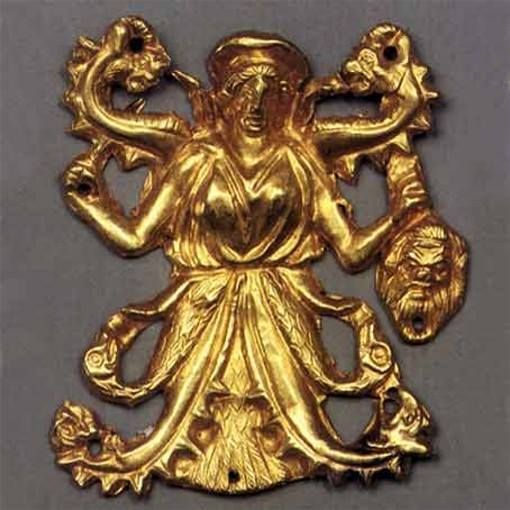
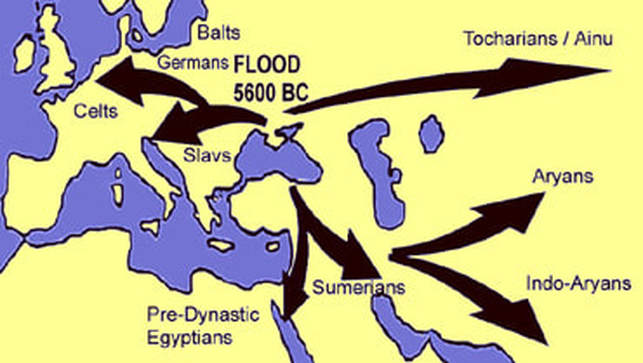
Scythian Snake Goddess APA; Drakaina Skythia
Ancients claimed Heracles and a Dracaena half serpent (mermaid like) being as the ancestors of the Scythians. Both have ties with similar stories among other Ural-Altaic legends. Starting with the serpent like mother of the Scythians, who in India was called Naga, by the local Scythian incomers. The NAK suffix and root word also has a very rich set of meanings in the Ugrian languages, including

( 4, feminine, joint-vertabra, genetive - source, navel, rule of
important person.)
To a lesser extent the root word is part of most U.A. and Sumerian languages. Several of the local Scythian tribes use this word for chief/ruler "Naick". Similarly the Ugrians Nay=queen, Nayer=king. Hungarian Nyek tribe. (Scythian NAICK-erde tribe next to the Aral Sea.). The Scythian goddess, "Api", depicted as having snakes instead of legs, which is evocative of Shameran, the goddess of wisdom and guardian of the secrets in. In Anatolian mythology, the goddess of wisdom and the guardian of secrets is Shahmeran, an anthropomorphic figure with a female head on a snake body. Her story can be traced from the Middle East to India with different fictions, one variation is also found in the Arabian Night Tales as the story of Jemlia - the Sultan of Underground (Mardrus, 1992: Vol.7, 68-131). Herodotus mentioned a woman, semi-human semi-snake, who had given three boys to Heracles in relation with an epic been told about him, in his fourth book in which he tells about the life and traditions of Scythians (Herodotus, 1996: 219). The end of the story points out Shahmeran's part in Anatolian mythology. According to this, the personification of Shahmeran exhibits a character who treats and heals the sick. In some parts of Anatolia it had been claimed that Lokman Hekim - the doctor hero of an another myth - was indeed educated by Shahmeran (Öz, 1994: 24). Shahmeran who possesses the secret of long and eternal life has been accepted as auspicious because of her compassion, self-sacrifice and absolute goodness as it was mentioned in the story. That is why her pictures are hung on bedroom walls of young girls and women, especially in the eastern and south eastern parts of Anatolia (Aksoy, 1997: 40).

Obviously, the goddess Aphrodite, otherwise the Scythian/Sarmatian goddess Argimpasa having snakes instead legs, describes the chthonic waters. The name Apatura (Apa-tura) is translated as '(The goddess) overcoming waters' (Trubachev 1977: 19). I translate this name as Scythian/Sarmatian *Ap- tur - 'The waters - the abundance, fertility', cf. Old Indian ap 'waters', tura 'strong, powerful, excelling; rich; abundant'. It is known that burials of priestesses of the goddess Argimpasa (Tabiti) were discovered in the Bolshaya Bliznitsa barrow (near the village Vyshesteblievskaya, the Krasnodar region, Russia) not far from Phanagoria (Rjabchikov 2002e: 167-168). Designs of a head-gear and ornaments from this burial are devoted to the deities of the sun, thunderstorm and water. I can say with reasonable confidence that these priestesses were served at the temple of Apaturon somewhere in the environs of the modern villages Sennoy and Vyshesteblievskaya.
Picture
Arrata
http://www.arattagar.co.uk/

https://www.youtube.com/watch?v=ImPSfcnlCiY

http://ukray.com.ua/2017/08/28/atlantis-is-crimea-and-the-sea-of-azov/

Picture
Picture

Ancestors

"I am no longer threatened by the dead, since I accepted their demands though accepting the serpent. But through this I have also taken over something of the dead into my day. Yet it was necessary, since death is the most enduring of all things, that which can never be canceled out. Death gives me durability and solidity. So long as I wanted to satisfy only my own demands, I was personal and therefore living in the sense of the world. But when I recognized the demands of the dead in me and satisfied them, I gave up my earlier personal striving and the world had to take me for a dead man. For a great cold comes over whoever in the excess of his personal striving has recognized the demands of the dead and seeks to satisfy them. While he feels as if a mysterious poison has paralyzed the living quality of his personal relations, the voices of the dead remain silent in his beyond; the threat, the fear, and the restlessness cease. For everything that previously lurked hungrily in him no longer lives with him in his day. His life is beautiful and rich, since he is himself." ~Carl Jung; Red Book
Picture
Picture
MYTHIC ANCESTORS
by Iona Miller, 2017
"I feel very strongly that I am under the influence of things or questions which were left incomplete and unanswered by my parents and grandparents and more distant ancestors. It often seems as if there were an impersonal karma within a family which is passed on from parents to children. It has always seemed to me that I had to answer questions which fate had posed to my forefathers, and which had not yet been answered, or as if I had to complete, or perhaps continue, things which previous ages had left unfinished." --Jung, Memories, Dreams, Reflections

"Genealogy reveals  the importance of ancestry to soul. The weight of human history is in the voices of the dead, in opening the mouth of the dead and hearing what they have to say. It's the actual living presence of history in the soul, the past in the soul, not just the deeply repressed or forgotten." ~James Hillman

"To be an ancestor you do not need to be dead, but you do need to know the dead – that is, the invisible world and how and where it touches the living.” 
--James Hillman


"Myths, after all, contain the greater story that never was but is always happening. Their waters run far deeper than the compelling tales told around ancient campfires to explain the seasons, the weather, and the formidable conflicts found within human societies and the human soul. Myth does server as a manner of explanation, but is also a mode of discovery, for myth is the coded DNA of the human psyche. It is the stuff of the evolving self that awakens consciousness and culture according to the needs of time and place. It is the promise of our becoming.

When we undertake to work consciously with the great old myths, a rich and varied world of experience opens up to us. We can travel with Odysseus, experience the passion play of Isis and Osiris, wander with Percival in search of the Grail, and die and be reborn with Jesus. Within the spoken or ritually enacted myth we can allow out lives to be writ larger, the personal particulars of our local existence finding their amplification and elucidation in the universals of the greater story and the larger characters that myth contains."
--Jean Houston, Personal Mythology

Obsidian: Tool & Mirror
In the 60s, Colin Renfrew recognized that the black volcanic glass, obsidian was an indicator of prehistoric trade, and highly desirable before the use of metals. It  could be fractured to produce sharp prismatic blades, cutting tools, or arrowheads. Long and regular blades made by pressure with a lever were used in neolithic agricultural activities. It was also polished to create early mirrors. Near Eastern obsidian in the Neolithic period was highly valued by late-Pleistocene hunter-gatherers used it before the first farming communities. It circulated around the Fertile Crescent from the late-glacial period.


PRIMORDIAL ANCESTORS
Mythic Ancestors; Unburied Memories


“Not only the child’s body, but his soul, too, proceeds from his ancestry.”
--Jung, CW17, pg. 44, para. 93


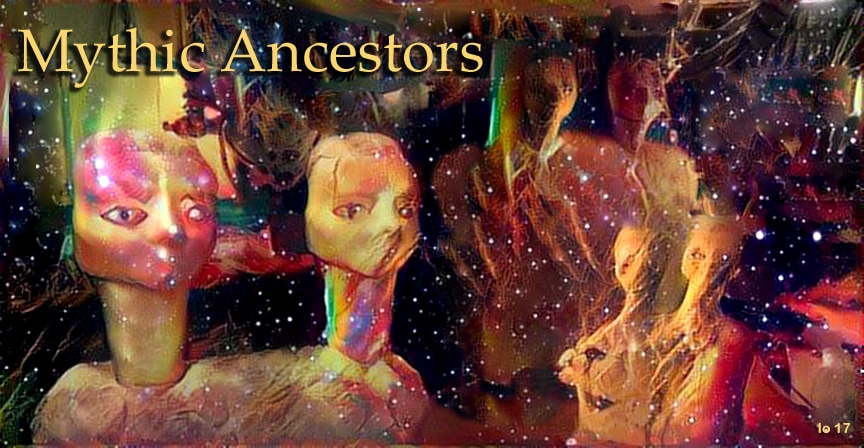
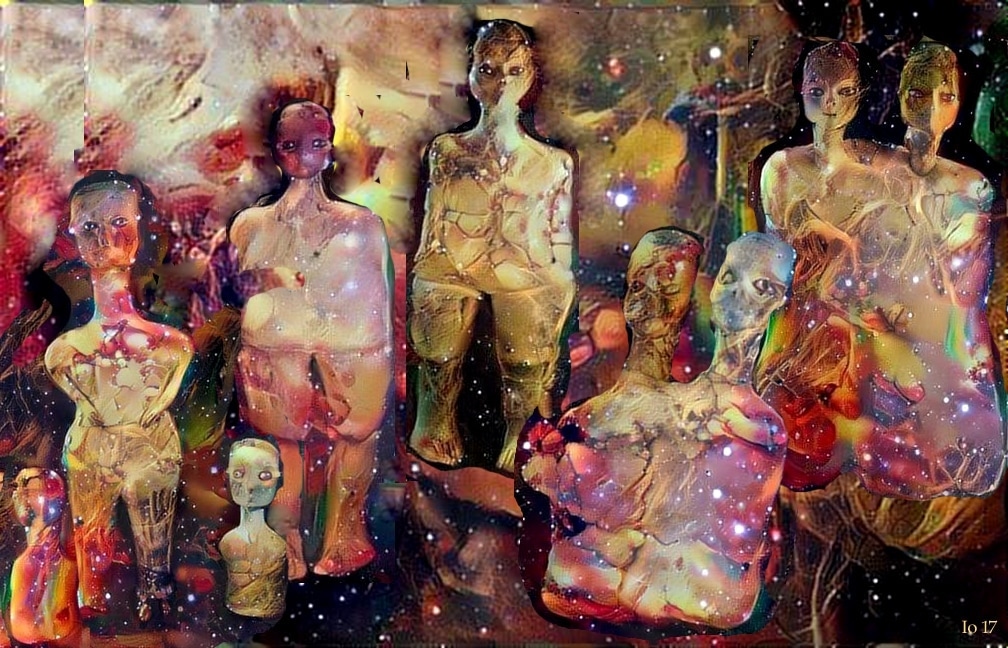
These statues represent the mythic ancestors of the Natufian culture, the first pre-historical farmers (pre-Gobekli Tepe). These are the first artifacts of ancestry worship, from Ain Ghazal, Jordan. As such, they are mythic ancestors to us all, expressing the power of myth as a way of recognizing, knowing, and experiencing. Family narratives are woven through time. Manetho reports that the gods, demi-gods, and Spirits of the Dead ruled 25,000 years in Egypt before the mortal kings.

Most of the figures are full statues or have two heads on one torso, perhaps of spouses, or mother-daughter, hermaphrodites, or unknown combinations for ritual reasons. Purportedly, these are not the remains of their biological families, but mythical ancestors of the early farmers, made of reed armatures and plaster.

The icons were buried beneath the household floor and undergird domestic life. But before burial, perhaps they grabbed and talked with them, experiencing the 'other' beyond what we can rationally grasp.

Dating between the mid-7th millennium BC and the mid-8th millennium BC, the statues are among the earliest large-scale representations of the human form, and are regarded as one of the most remarkable specimens of prehistoric art from the Pre-Pottery Neolithic B period. They are in the Jordan Museum in Amman.

The same agrarian culture had a practice of restoring plaster faces to the skulls of their loved ones. They were found in Jericho from nearly 10,000 years ago. Some were painted and had shells for eyes. They were displayed in groups.


More than sixty plaster skulls have been found at six sites around the area of the Levant, usually dated to 7,000 – 6,000 BC, but some go back as far as 8,000 BC.  One such skull was excavated in the 1930s by John Garstang at Jericho, along with five other plastered skulls, and is currently in the Royal Ontario Museum. Other sites ... include Ain Ghazal and Amman, Jordan, and Tell Ramad, Syria.  Most of the plastered skulls were from adult males, with some women and children.

Genealogy is a way of honoring the ancestors with a ritual from ancient times when lists of god-kings described the natural order of things rooted in mythic and 'divine' ancestors. The only way to revision and interact with it as a gestalt matrix includes the fictional, legendary, and mythological lines of this traditional World Tree.

It is but one way to acknowledge our divinity, nobility, and humanity. Genealogy is a sure path to the heart. We can "gather our ancestors" before we are gathered unto them.
We were part of their dreams before we were born. Engaging in a larger conversation with the past brings a deepened self-understanding.

The mythology of our ancestors is as important as their cosmology. In paganism, the gods were near. We can explore the mystic in ourselves and in our ancestors. Our worldview is the root of our identity and relationship to Nature and our own deep nature. Researching the cosmologies of our direct ancestors in the historical era provides a quick path into dream shamanism, as these ways are still half-remembered. Our common destiny lies beyond any worldview.

This is also a relationship to the collectivity of the dead; for the unconscious corresponds to the mythic land of the dead, the land of the ancestors. Jung was the first to link the concept of ancestors to unconscious thinking. We learn to remember what our soul already knows. Our personality is literally expressed through our ancestors.

The gods and goddesses have 'gone to seed', and we are that -- their seed, their progeny. As James Hillman says, their minds and powers are living us in poetic moments of fantasy, insight and intuition. Nature, psyche and life are unfolding divinity. We are only cut off from the dead by what we have buried and forgotten. Working with our ancestral connection means connecting to everything around us and how we are placed in the world.

Jung said transpersonal psychic life "is the mind of our ancient ancestors, the way in which they thought and felt, the way in which they conceived of life and the world, of gods and humans beings. The existence of these historical layers is presumably the source of belief in reincarnation and in memories of past lives” (Jung, 1939, p.24).

Gods are difficult to destroy or conceal. Fictitious lines of descent blend indistinguishably with medieval forgeries. Some divinities may originally have been historical persons or war-chiefs, now lost to the mists of pre-history. Seedlines codify ancient ethnic identity and empires. Later, royals added them to their lines to bolster their claims to divine rule and the founding of thrones. Though not factual, traditional genealogy was a geographical and spiritual compass.

At root, traditional genealogy is an archetypal activity, recapitulating and extending humanity's oldest activities, including the imaginal root. The aesthetic response is an ethical response -- a response of the heart an non-rational wisdom -- that values the ancestors and the genealogical history.

Genealogy is an archetypal order, an aesthetic construction, and a virtual map of the personal and collective unconscious, reflecting a principle of totality and primordial origins. We can engage the ancestors as living presences shaping our lives and identity, in nature, dreams, visions, and symptoms. We can establish dialogues with the ancestors working through personal wounds and generational trauma to heal ourselves and our ancestral lines.


Myth and symbolism are the imaginal language, a means of self-discovery, and a way of gaining access to the secrets of the psyche. Genealogy and dreams are ways of reconnecting with our whole being from its ancestral inception. Both are parts of our personal mythology, providing deeper understanding of our masculine and feminine dynamics.

The unconscious psyche is the ancestral "land of the dead," where we find meaning for our lives and understanding of our own personal myth. All our ancestors had mothers. We can acknowledge the changing of the seasons and life passages in the manner that our ancestors acknowledged it. Myth and symbolism are the imaginal language, a means of self-discovery, and a way of gaining access to the secrets of the psyche.

"Our religion is the traditions of our ancestors -- the dreams of our old men, given them in the solemn hours of the night by the Great Spirit; and the visions of our sacred medicine men, and is written in the hearts of our people." --Chief Seattle

REFERENCES

https://en.wikipedia.org/wiki/%27Ain_Ghazal_Statues
http://www.iianthropology.org/archaeologybestartprehistoryainghazal.html natufians

Picture
Picture
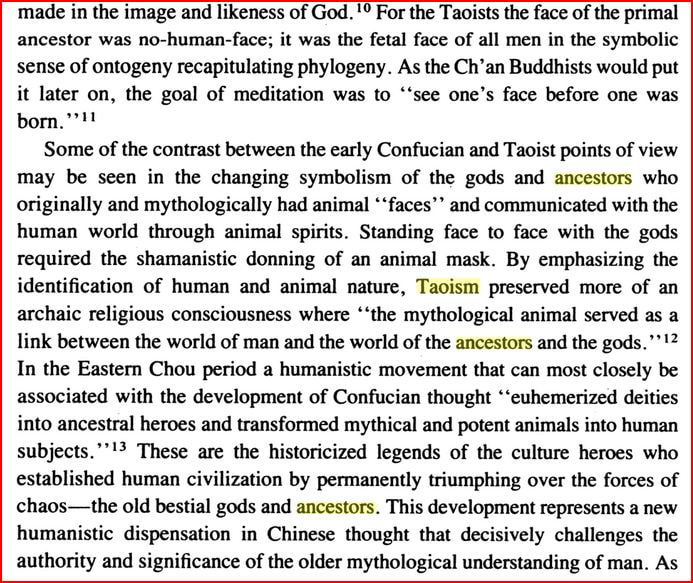
Myth and Meaning in Early Taoism: The Theme of Chaos (hun-tun)By N. J. Girardot
THE MYTHIC ROOT
CHAIN OF GENERATIONS;
Descent from Antiquity
Iona Miller

Infinite Regress
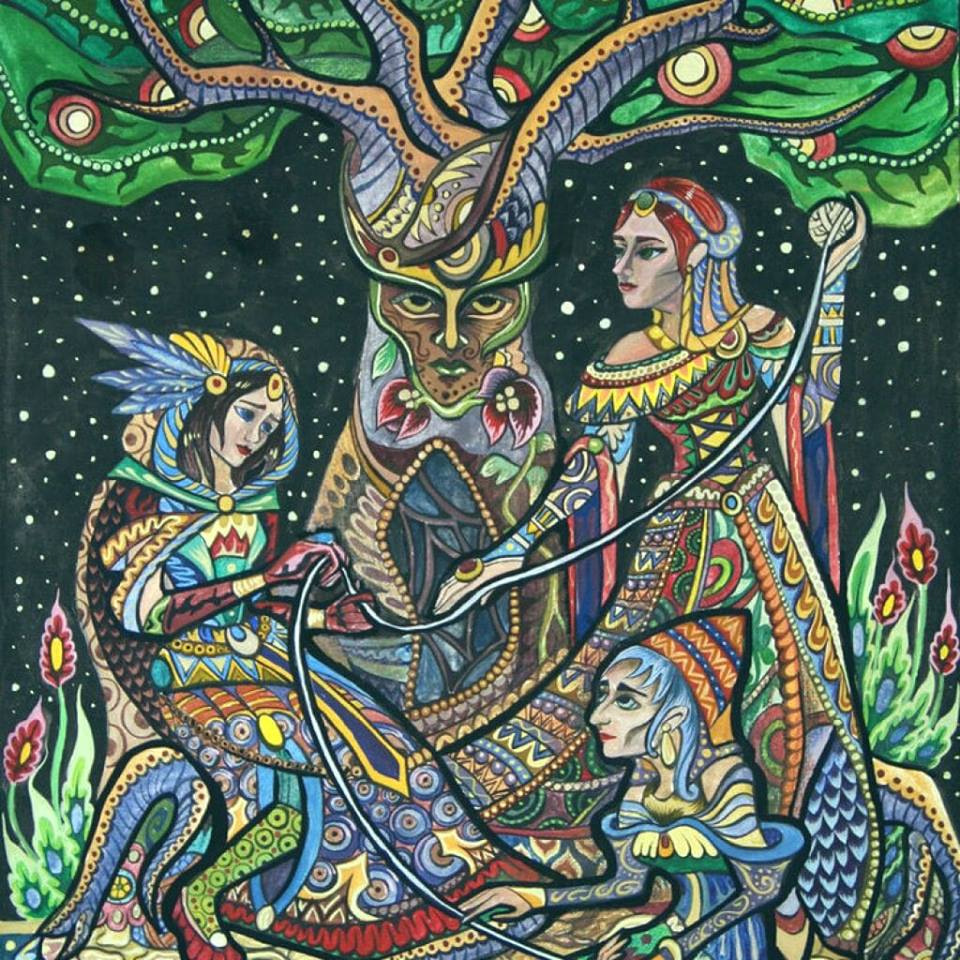
Only a Jungian approach to traditional genealogy keeps the historic/mythic gestalt of The World Tree alive as a symbol of wholeness -- a holistic resonant field pattern. According to Jung, trees are a symbolic reference to the self, so family tree is self-defining. As well as our lineage, our ancestors also form a vast symbol chain, rooted in the mythic unconscious and pre-history.

The symbolic function is beyond innate impulse and ideological bias. Through introversion, we are fertilized, inspired, regenerated, and reborn. Self-incubation, self-castigation, and introversion are closely related ideas. Immersion in oneself (introversion) is a penetration into the unconscious, the imaginal world of psyche.

The World Tree is the Axis Mundi of genealogy, a worldwide database of genealogical connectivity. At this point travel and correspondence is made between higher and lower realms. Communication from lower realms may ascend to higher ones and blessings from higher realms may descend to lower ones and be disseminated to all. The spot functions as the omphalos (navel), the world's point of beginning.
The earliest mythologies are of the World-Tree, or Tree of Life. Aspects of the same image, sacred trees are the most common motif from the ancient world. The Tree connects our psychophysical aspects from sub-nuclear to macrocosmic scales. The trunk is the axis of psychic growth that unites Heaven and Earth, spirit and matter.

The major branch points on our shared paternal lineage trace back through genealogy, history, antiquity, and ancient anthropology through myth to reach our early hominid ancestors. The branches on the paternal tree are haplogroups. SNP markers on the Y-Chromosome define them. Deep ancestry research depends on recognizing and analyzing patterns in Y-STR marker values for discovering Y-SNPs.

The serpents of our family lines are entwined like Celtic knots in and around the World Tree. Celtic snakes symbolize the notion of rebirth. They still promise us primordial Knowledge -- unverified personal gnosis. Jung said, "the serpent is the earthly essence of man of which he is not conscious. Its character changes according to peoples and lands, since it is the mystery that flows to him from the nourishing earth-mother."

The healer traversing the axis mundi to bring back knowledge from the other world is a common shamanic concept. Anyone or anything suspended on the axis between heaven and earth becomes a repository of potential knowledge. The Tree is the means of communication with spiritual realms. It is our Tree of Voices -- Tree of Souls. Remembering is a noble and necessary act. The call of memory, the call to memory, reaches us from the very dawn of history.

On the global-level, spiritual experiences have been shown to buffer against the negative effects of stress on well-being for older adults. Spiritual experience potentially moderates the deleterious impact of a given day’s perceived stress on that day’s positive and negative affect. Thus, it relates to self-care, well being, and healing. Sometimes physical pain is a substitute for psychic pain. Healing is not always physical: it can occur in the emotional, mental and spiritual life, moderating immunity and neurochemistry.

Genealogy contains a spiritual healing potential, the living sap of the Tree, a manifestation of the sacred. It is a Grail banquet of cultures, customs and symbolism. We see in many manuscripts that wings are used to mark progress or advancement of an alchemical solution toward perfection. Crowns mark the final stage of a spirit or solution: perfection, completion, ascension. The spirit, by death or enlightenment, will produce the pure, perfected, incorruptible spirit. In alchemical terms, the incorruptible body is the potential of the philosopher's stone

Some branches of the World Tree are pruned (extinct). Others still thrive. Data entry is not fun, but it makes information analysis and pattern recognition much easier. By engaging in genealogy we create a sacred space, a sacred center. There is a deep ecology to the flow of relationships. Our return to the womb of the Mothers is a creative regression. Experientially it manifests within us as a spiritualizing instinct, a recursive "bending back" toward the primordial and divine.

We link backward to the bond that transcends the limitations of the physical form. Consciousness turns back on itself, reiterating each level of organization, de-structuring each strata as it dives deeper toward the unconditioned, formless beginning, or "unborn" state -- the Void of the Cosmic Womb. In essence, we re-enter the womb as we are initiated in the mysteries of the psyche. We re-conceive our primal self image, healed by communion with the creative Source - - our own Royal Wedding.

Religious myths give us the security and inner strength not to be crushed by the monstrousness of the universe. "Belief is no adequate substitute for inner experience, and where this is absent even a strong faith which came miraculously as a gift of grace may depart equally miraculously. People call faith the true religious experience, but they do not stop to consider that actually it is a secondary phenomenon arising form the fact that something happened to us in the first place which instilled pistis into us — that is, trust and loyalty." --Carl Jung, The Undiscovered Self," CW vol. 10, par. 521

In the Red Book, Jung said this is the way:
“An opus is needed, that one can squander decades on, and do it out of necessity. I must catch up with a piece of the Middle Ages-within myself. We have only finished the Middle Ages of-others. I must begin early, in that period when the hermits died out. Asceticism, inquisition, torture are close at hand and impose themselves. The barbarian requires barbaric means of education. My I, you are a barbarian. I want to live with you, therefore I will carry you through an utterly medieval Hell, until you are capable of making living with you bearable. You should be the vessel and womb of life, therefore I shall purify you.
The touchstone is being alone with oneself
."

Genealogy can be seen as a way of honoring the ancestors with a ritual from ancient times when lists of god-kings described the natural order of things rooted in mythic and 'divine' ancestors. The only way to revision and interact with it as a gestalt matrix includes the fictional, legendary, and mythological lines of this traditional World Tree. It is but one way to acknowledge our divinity, nobility, and humanity. Genealogy is a sure path to the heart. We can "gather our ancestors" before we are gathered unto them.

Mythology lost its role of explaining the forces of nature. But its role of delivering insights into the hidden, deep endeavors and fears of any human seems more alive than ever. It is a Mystery how our ancestors pass memories to us across the generations. They relate us to our ontological questions about space, time, and eternity, the deep structure of the human mind and perception, life and death -- what exists and what doesn't. Time concerns the existential nature of things -- temporal relationships.

The mythology of our ancestors is as important as their cosmology. We can explore the mystic in ourselves and in our ancestors. Our worldview is the root of our identity and relationship to Nature and our own deep nature. Researching the cosmologies of our direct ancestors in the historical era provides a quick path into dream shamanism, as these ways are still half-remembered. Our common destiny lies beyond any worldview.

"You could study the ancestors, but without a deep feeling of communication with them it would be surface learning and surface talking. Once you have gone into yourself and have learned very deeply, appreciate it, and relate to it very well, everything will come very easily." (Ellen White, Nanaimo)
Psyche creates reality every day. We have a mystical connection with our primitive ancestors. The primordial ancestors are still alive within the depths of our psyches and reach out to us with their ancient wisdom. We instinctively behave and feel the same ways as generations of our ancestors have in their lives.

This is also a relationship to the collectivity of the dead; for the unconscious corresponds to the mythic land of the dead, the land of the ancestors. Jung was the first to link the concept of ancestors to unconscious thinking. We learn to remember what our soul already knows. Our personality is literally expressed through our ancestors.

The gods and goddesses have 'gone to seed', and we are that -- their seed, their progeny. As James Hillman says, their minds and powers are living us in poetic moments of fantasy, insight and intuition. Nature, psyche and life are unfolding divinity. We are only cut off from the dead by what we have buried and forgotten. Working with our ancestral connection means connecting to everything around us and how we are placed in the world.

Jung said transpersonal psychic life "is the mind of our ancient ancestors, the way in which they thought and felt, the way in which they conceived of life and the world, of gods and humans beings. The existence of these historical layers is presumably the source of belief in reincarnation and in memories of past lives” (Jung, 1939, p.24).

In 'Extending the Family' (1985), Hillman says, "With the passing of time a sense of its power grows within one's psyche, like the movements of its skeleton inside one's flesh, which keeps one in servitude to patterns entombed in our closest attitudes and habits. From this interior family we are never free. This service keeps us bonded to the ancestors." Some report a sort of
"calling illness" until they respond to the ancestors calling them to do the work.

Genealogy is the science and art of what is emerging into the collective consciousness in one of the biggest hobbies of our era. It is a vast reclamation and reconstruction of our holographic connections, and certain emotionally toned experiences and images inherited from our ancestors, our spiritual guides. We translate meaning into life.

The entire gestalt of the World Tree is an iconic image -- a multidimensional symbol requiring hermeneutics as much as history for best practice. Genealogy has the problem of only focusing on the ancestors with surviving records, not all your ancestors. Of course, all the expansive aspects of the ancestors leave their shadow traces. With the light comes darkness. Ancestral blessings are not unaccompanied by ancestral curses.

The shadow is transmitted in a million subtle gestures and intonations. As you become aware of them in yourself, you can look back over your shoulder at your ancestors and see where these patterns came from. The family shadow is not the sole answer, but it's a place to do some work. It's a realm that is within our means to influence. When we stop passing the shadow on to the next generation, we spare them and break the chain. They don't pass it on either.

We can cut through the Fog of Lore to the mythic core. Clan ancestors are more than euphemisms. They may well be more than legends, being actual progenitors or composites of the ancient lineage. Some myths may have developed after the destruction of powerful lineages, displays of majesty, culture heroes, and ancestral temples. Royal family ancestor cults probably drew on a number of ancestral lineages.

Genealogy is the narrative of a pre-modern world. It has traditional roots in the ancient theogeny of gods and goddesses, divine-king lists and The Bible. Ancestral gods and ancestral religions developed over eons and are as old as particular branches of mankind -- gods of the blood. Astrologically determined gods and goddesses can often be found at the roots of dynastic houses. Royal houses claimed power through descent from ancestral gods.

Gods are difficult to destroy or conceal. Fictitious lines of descent blend indistinguishably with medieval forgeries. Some divinities may originally have been historical persons or war-chiefs, now lost to the mists of pre-history. Seedlines codify ancient ethnic identity and empires. Later, royals added them to their lines to bolster their claims to divine rule and the founding of thrones. Though not factual, traditional genealogy was a geographical and spiritual compass.

When Rome Christianized in the fourth century, it cut off the mythic corpus, and demoted gods to human status and allegories. The medieval period filled the gap with tales of the Holy Grail. The pagan content of mythology was codified in the mid-fourteenth century in Boccassio's Genealogy. Later, the Carolingians used such works to justify their right to rule, also citing the spurious Donation of Constantine, which the Church used to justify the appointment of rulers.

At root, traditional genealogy is an archetypal activity, recapitulating and extending humanity's oldest activities, including the imaginal root. The aesthetic response is an ethical response -- a response of the heart -- that values the ancestors and the genealogical history. Genealogy is thus an archetypal order, an aesthetic construction, and a virtual map of the personal and collective unconscious, reflecting a principle of totality and primordial origins.


Traditional genealogy considered these mythological inclusions best-practice, yet it may be more of a psychic than historical "fact" -- the product of a collision between pagan and Christian societies and their reconciliation. Historical time required a linear descent, even if it masked pagan roots at the theological fringe. Even if medieval genealogies connecting ancient kings to Adam are pure invention, they retain certain psychic values that are part of the archaeology of the collective unconscious.


Subjective mental life is a primary metaphor of
subjective Experience;
Primary Metaphor Becomes Embodied
and maps across generations.
The Grounding of the Whole is the grounding of its parts.

We reason with such metaphors.
(Lakoff & Johnson)

This argument against expunging legend and myth
from traditional genealogy practice is simple:

What happens outside us in these days is the image that the peoples live in events, to bequeath this image immemorially to far-off times so that they might learn from it for their own way; just as we learned from the images that the ancients had lived before us in events. ~Carl Jung, The Red book, Page 239.

"But if the believer without religion now thinks that he has got rid of mythology he is deceiving himself: he cannot get by without "myth."
~Carl Jung, Letters Vol. II, Pages 482-488


Genealogy was used to support the claims to nobility of individual families, both to differentiate them from commoners and in rivalry with other families either within the same national group or outside it.

Always when such genealogies are recorded by Christian writers (e.g. Bede, Historia EcclesiasticaI 15), the gods that appear in them will have been interpreted euhemeristically, i.e. as great kings or heroes who came to be worshipped as gods after their deaths. Descent from such great and successful men would have been regarded as a claim to nobility, while heathen gods themselves could hardly have been regarded with anything but abhorrence. Since the gods in genealogies were considered to have been really mortals, there was moreover felt to be no inappropriateness in continuing the genealogical lists back beyond them, sometimes even as far as Noah and Adam.

Biblical genealogy encouraged medieval scholars to compile genealogies stretching back to the remote past.

If genealogies were taken back to the gods in heathen times, they were presumably closely associated with the kind of legend that survives in the Eddic poems quoted above, and may have implied that those who could claim such descent were different from ordinary mortals. But if the gods were only introduced into genealogies after the coming of Christianity, then the euhemeristic interpretation of the gods must have preceded the construction of the genealogies. This latter view makes it easier to explain certain aspects of the extant genealogies, for instance the fact that many of them conflict with each other, so that there appears to have been no fixed tradition about the relationships of the gods and their human sons, and the even more striking fact that the family relationships of the gods in genealogies are very different from those they have in mythology.


It must be regarded as uncertain how common it was for genealogies in heathen times to go back to the gods, in Christian times it became almost universal. Some juxtapositions make for uncomfortable conflict both with the mythological tradition and historical plausibility.
http://www.vsnrweb-publications.org.uk/Descent-from-the-gods.pdf


THE PRIMORDIALS

These Gods are the Original race of Gods Before the Olympians, Titans, Monsters, Demigods, Mythical Creatures, and Mortals.

Hesiod's Theogony (c. 700 BC) tells the story of the genesis of the gods. After invoking the Muses (II.1-116), he tells of the generation of the first four primordial deities:

"First Chaos came to be, but next... Earth... and dim Tartarus in the depth of the... Earth, and Eros.
The Iliad, an epic poem attributed to Homer about the Trojan War (an oral tradition of 700 or 600 BC), states that Oceanus (and possibly Tethys, too) is the parent of all the deities.[4]
  • Alcman (fl. 7th century BC) made the water-nymph Thetis the first goddess, producing poros (path), tekmor (marker) and skotos (darkness) on the pathless, featureless void.
  • Orphic poetry (c. 530 BC) made Nyx the first principle, Night, and her offspring were many. Also, in the Orphic tradition, Phanes (a mystic Orphic deity of light and procreation, sometimes identified with the Elder Eros) is the original ruler of the universe, who hatched from the cosmic egg.[5]
  • Aristophanes (c. 446 BC – c. 386 BC) wrote in his Birds, that Nyx is the first deity also, and that she produced Eros from an egg.

TITANS
Before the time of the mighty Olympian gods and goddesses, before the time of the creation of humans, the earth was ruled by a race of giants called Titans. As the stories go, the Titans first appeared when Light emerged from out of the darkness of Chaos and the heavens, the earth and the sea were formed. These ruthless giants were so jealous of their power that when the great Titan Cronos realized he was to father a new race of gods that could threaten his unilateral rule, he swallowed his yet unborn offspring. But, despite this determined effort on the part of Cronos to eliminate all potential challengers, one son, Zeus, survives and forces his father to restore his siblings. Soon after, a great war began that pit the young gods and goddesses led by Zeus against the older Titan race. Eventually, the Titans were defeated, banished to a distant and isolated other-world and the new rulers of the universe took their place upon Mount Olympus. The rich and complex fabric of our Western mythological heritage has grown out of this myth of a pre-human world ruled by the Titans. What is of interest to us is a particular myth found in the writings of Orpheus, the myth of Dionysus-Zagreus--a story of an encounter between the subdued Titans and the favored son of Zeus, Dionysus. According to this myth, Dionysus was the child of Zeus and Persephone. One day, shortly following their defeat, the angry and vengeful Titans lured the very young yet curious Dionysus to a remote cave where he was beyond the vigilant and watchful eye of his protective father, Zeus. There, the Titans visciously attacked the youth, tearing him limb from limb and then devouring his every piece. Zeus, learning of the assault, immediately struck at the Titans who, with their bellies still full with the freshly consumed young god, were reduced to smoldering ashes. And, as the story goes, it was from these ashes that Zeus then created humankind. Thus, all of humankind is part Titanic and part Dionysian, two very different archetypal potentialities that roam our psychic landscape.

The cold, hubristic Titanic threatens to arrive. We are today witnessing an attempt at the triumphant return of the great Titans, a return that heralds the victory of the literal over the imaginal, the rational over the aesthetic, arrogance over eros, fundamentalism over tolerance, isolation over relatedness, pessimism over hopefulness, projection over responsibility, demonization over understanding, and technology over psychology. And, what should be of paramount concern to us all is the reality that the most prominent casualty of the Titanic way is Psyche in all her spontaneous, imaginal, erotic splendor.

http://www.jungatlanta.com/articles/summer05-return-of-titans.pdf


In the Western world, classical antiquity is usually taken to mean the period spanning the civilizations of ancient Greece and Rome – around the 8th century BC to the 5th century AD.  Most earliest surviving church records in Europe date from around the mid-16th century.  Written records which survived the 1,000 year gap of war, natural disaster and ‘intellectual darkness’ are rare to non-existent.

Charlemagne


A link to aristocracy may add a few hundreds years to a particular lineage, but the genealogical claims of the medieval aristocracy were often dubious.  Many European royal dynasties manufactured lines of descent from figures such as Julius Caesar, Alexander the Great, even Jesus Christ, for propaganda purposes.  Nevertheless, historical records do at least exist for royal and noble families.

Unfortuntately, there are few contemporary documents against which to confirm these lineages. The main source is the History of the Franks, written in the late 6th century by Gregory of Tours. In addition, there is a mid-7th century document known as Chronicle of Fredegar that deals with the genealogy of the Merovingian kings, but the earlier generations appear to be based almost exclusively on Gregory of Tours. Furthermore, all subsequent chroniclers, in particular the oft-quoted 8th-century Liber Historiae Francorum, clearly draw from Gregory of Tours for the Merovingian parts of their pedigrees.

Descents from Antiquity

Internet genealogies suffer a well-known defect -- many of them accept as true many lines that are known by scholars to be false. Geni is no exception. In Geni’s early days, many users uploaded GEDCOM files with spurious and fantastic genealogies. As users we’ve done a lot of cleanup, merging duplicates and cutting bad connections, but there is a lot of work still to do.

Usually, the term “Descents from Antiquity” refers to modern efforts to find plausible lines of descent. However, it can also include traditional descents that have varying degrees of reliability.

This project is designed to help clean up the many fictitious genealogies and to focus attention on legitimate debate about extending our shared genealogy. You can help us by identifying questionable lines. It is generally unhelpful to simply say something like, “No one can prove a descent from Julius Caesar.” What is most helpful is to identify the specific generations where the evidence fails, search for reliable sources, then start a discussion.

Medieval forgeries

A common belief in antiquity and in the middle ages was that tribes took their name from a common ancestor. For example, the Historia Brittonum (Nennius, 9th century) names Alanus as the first man to live in Europe. He had a son Hiscion, and Hiscion’s four sons Francus, Romanus, Alamanus, and Brutus were the ancestors respectively of the French, Romans, Germans, and British. The name of this Alanus was probably a corrupted form of Mannus, the Old Germanic god who was the ancestor of mankind. Some scholars believe that Mannus was another name for Bor, the father of the god Odin in Norse tradition. In English, German and the Scandinavian languages we get our word man from Mannus.

When the Europeans converted to Christianity, they had a problem. Their royal families were only a few generations removed from the old gods. And, worse. Exposed to Roman arts and sciences, they discovered the idea of “historical time”. The world was older than they had ever thought about. Their royal pedigrees weren’t long enough to go back to the creation of the world.

From the Romans they learned that modern science had proved that everyone on earth was descended from Adam and Eve. (It said so in the Christian scriptures, which were absolutely true -- according the scholars.)

The answer was simple and obvious. The old gods had to have been humans, famous men and great warriors who came to worshipped as gods. And, if they were human, they must have been descended from Adam and Eve like everyone else. The trick was to figure out how.


One of the earliest surviving attempts to create this kind of genealogy is the Historia Brittonum by the Welsh monk Nennius (9th century), who recorded the following genealogy:

(1) Noah, his son (2) Japheth, his son (3) Joham, his son (4) Jobath, his son (5) Bath, his son (6) Hisrau, his son (7) Esraa, his son (8) Ra, his son (9) Aber, his son (10) Ooth, his son (11) Ethec, his son (12) Aurthack, his son (13) Ecthactur, his son (14) Ecthactur, his son (15) Mair, his son (16) Semion, his son (17) Boibus, his son (18) Thoi, his son (19) Ogomuin, his son (20) Fethuir, and his son (21) Alanus.

Nennius also tied Alanus to Rome by making him a husband of Rhea Silvia, whose twin sons Romulus and Remus are said to have founded Rome in 753 BCE. The connection is scarcely credible historically, but served neatly to graft the eponymous ancestors of the northern Europeans onto classical tradition by making them brothers of Romulus, the eponymous ancestor of the Romans.

These medieval genealogies connecting ancient kings to Adam are pure invention. They are interesting now because they show the history of history.

England

The Anglo-Saxons, forerunners of the modern English, were ruled by kings who claimed to be descended from the god Woden (Odin in the Norse versions). In later Scandinavian versions, Woden was the son of Bor, son of Búri. Some scholars believe that in the Germanic version, which included the Anglo-Saxons, Woden was the son of Mannus, the ancestor of mankind, who was son of Tuisto.

English monks kept Woden, but dumped Bor and Búri. They “discovered” that Woden was descended from Noah, but the process took several tries.


In one place, the 9th century Anglo-Saxon chronicle gives the following line. There are too few generations here, but this fragment might preserve the earliest non-divine version of Woden’s ancestry.

(1) Noah, his son (2) ---, his son (3) Finn, who was born in the ark, his son (4) Freothelaf, his son (5) Frithuwald, his son (6) Woden.

About the same time, Nennius in his Historia Brittonum gives a slightly different version. Here we get two more generations beyond Finn, which might also represent an authentic tradition.

(1) Geat, “who, as they say, was the son of a god”, his son (2) Godwulf, his son (3) Finn, his son (4) Frithuwulf, his son (5) Frithowald, and his son (6) Woden.

Nennius gives us more theology than genealogy. He says that Geat “as they say, was the son of a god, not of the omnipotent God and our Lord Jesus Christ (who before the beginning of the world, was with the Father and the Holy Spirit, co-eternal and of the same substance, and who, in compassion to human nature, disdained not to assume the form of a servant), but the offspring of one of their idols, and whom, blinded by some demon, they worshipped according to the custom of the heathen.”

The Anglo-Saxon Chronicle is a collection of documents rather than a single document. In another place (855), it gives a fuller line.

(1) Noe [Noah], his son (2) Sceaf, his son (3) Bedwig Sceafing, his son (4) Hwala Bedwiging, his son (5) Haþra Hwalaing, his son (6) Itermon Haðraing, his son (7) Heremod Itermoning, his son (8) Sceldwea Heremoding, his son (9) Beaw Sceldwaing, his son (10) Taetwa Beawing, his son (11) Geat Taetwaing, his son (12) God wulf Geating, his son (13) Fin Godwulfing, his son (14) Frealaf Finning, and his son (15) Woden Frealafing. (Two of the Saxon Chronicles Parallel, Plummer and Earle (eds.), 66, 67 and note 6).

A note says, “id est filius Noe se waes geboren on þaere earce Noes.” That is, “he [Sceaf] is the son of Noah, he was born in Noah’s ark.” This detail ties the old pagan tradition to the new Christian tradition. Sceaf was a Norse god who arrived by boat as a baby to rule the Danes. Now, he is neatly made the son of the Christian ark builder.

Later monks, perhaps competing for prestige with the Franks, decided to dump Noah and take Woden’s ancestry back to Troy, then connect the Trojans to the Jewish scriptures. This version runs as follows. Note that the names of the new generations, between (10) and (16) have been drawn chiefly from nicknames of the old god Thor. Some of the other names might have been invented in a similar way.

(1) Judah, ancestor of the tribe of Judah, his son (2) Zara, his son (3) Darda, his son (4) Erichthonious, his son (5) Tros, his son (6) Ilus, his son (7) Laomedon, his son (8) Tithonius, his son (9) Memnon, his son (10) Thor, his son (11) Einridi, his son (12) Vingethor, his son (13) Vingener, his son (14) Móda, his son (15) Magi [Noe], his son (16) Sceaf [Seskef], his son (17) Bedwig [Bedvig], his son (18) Hwala, his son (19) Hrathra [Annarr], his son (20) Itermon [Ítermann], his son (21) Heremod [Heremód], his son (22) Heremod [Heremód], his son (23) Beaw [Bjárr], his son (24) Tætwa, his son (25) Geat [Ját], his son (26) Godwulf [Gudólfr], his son (27) Finn, his son (28) Frithuwulf, his son (29) Frealaf [Fridleifr], his son Frealaf [Fridleifr], his son (30) Freawine, his son (31) Frithuwald, and his son (32) Woden.

Attempts to reconcile these genealogies by equating the human Frithuwald with the divine Bor, and the human Frealaf with divine Búri have been problematic, because they end by giving Woden a set of mythical relatives that include the Ice Giants.

France

The Franks, a confederation of Germanic tribes that formed the core of modern France, claimed descent from Francus (or Francio). According to one version of the story, Francus and his people were defeated by the Roman general Drusus in 11 BCE. Francus was killed, and they were relocated to the region between the Rhine and the Danube.

Frankish monks linked Francus to the kings of Troy. The Chronicle of Fredegar (7th century) mentions the legend. It was elaborated in the Liber historiae Francorum (probably 727). Successive generations continued adding new details.

In other words, the Franks claimed to be the distant cousins of the Romans (who claimed descent from Aeneas, another Trojan). It was a nice piece of political propaganda
because it fit nicely with two things the Franks wanted to emphasize: (1) as cousins of the Romans they were equal to the Romans, and (2) as cousins and equals, they were the legitimate successors of the Roman empire.

The Grandes Chroniques de France (13th - 15th centuries), a vast compilation of historic material, refers to the Trojan origins of the French dynasty.

Johannes Trithemius' De origine gentis Francorum compendium (1514) describes the Franks as originally Trojans (called "Sicambers" or "Sicambrians") after the fall of Troy who came into Gaul after being forced out of the area around the mouth of the Danube by the Goths in 439 BCE (1:33). He also details the reigns of each of these kings—including Francus (43:76) from whom the Franks are named—and their battles with the Gauls, Goths, Saxons, etc.

(Source: Wikipedia, Francus)

Ireland John O'Hart (1824-1902), an Irish genealogist used ancient sources, such as the Lebor Gabála Érenn and the Annals of the Four Masters, to compile a genealogical history of Ireland, Irish pedigrees; or, The origin and stem of the Irish nation (1876). According to his work, the Irish kings are descended from Adam as follows:


Picture
Powered by Create your own unique website with customizable templates.
  • Home
  • PUBLICATIONS
  • ARTICLES 2017
    • MAJOR ARCANA
      • ARCANA VIDEOS
    • MYTHIC FORMS
      • NUIT
      • GEN-ISIS
      • SOBEK - Wild Psyche
      • KYBELE
      • Helios Uplifter
      • HELIOS TITAN
      • Aphrodite
      • THANATOS
    • ART & TRAUMA
    • PAINTING
    • DAIMON
    • ANIMA MUNDI
    • WORLD WEARY
    • INTERIORIZED VISION
    • TRANSFIXED
    • REFLECTIONS
    • CREATIVE APPROACH
    • SELF-EXPLORATION
    • SELF KNOWLEDGE
    • THEURGY
    • ART & SOUL
    • ESOTERICS
    • INDIVIDUATION
    • LABYRINTH
    • JUNGIAN QABALAH
    • THE BEAD GAME
    • DUNE MYTHS
    • NEW AGE CRITIQUE
    • PHILOSOPHERS STONE
    • BLACK MADONNA
    • ST. GERMAIN Film
    • DRAGON ARCHETYPE
    • TOTAL ECLIPSE
    • PROJECTS
      • PSYCHE
      • Sobek
      • Athena 2018
      • Ares
      • Apollon
      • Horus
    • Afterlife
    • Transformation
    • Transgressive Forces
    • Wisdom Light
    • Sacred Sex
    • TARANTISM
  • ABOUT
  • GENEALOGY
    • Here Be Dragons Home
      • DRAGONTREE
      • Myth Ancestors
      • EGYPT
      • Grail
      • CATHARS
    • 100 Generations
    • Kindred Spirits
    • Ancestors
    • Lineage
    • XX
  • GNOSIS
  • HEALING
    • Metaphors
    • Holo Healing
    • Microvibrations
  • Mind-Body
    • BODY & SOUL
  • Io Art
  • FRONTIER SCIENCE
    • SEDLAK
    • Pineal DMT
    • Bioholography
    • The Field
    • Holographic Archetypes
  • DREAMS
    • Dreamwallker
  • SACRED GEOMETRY
    • QABBALAH
      • DIAMOND BODY
  • ALCHEMY
    • PRIMA MATERIA
  • VIDEOS
  • ARCHIVES
    • Climate 2020
  • Journal
  • Contact
  • Wrestling Thanatos
  • Innate Imagery
  • SIRIUS RISING
  • UFO
  • OANNES
  • DREAMHEALING
  • SELF THERAPY
  • ART SOUL
  • PSYCHE
  • XYZ
  • EVENT HORIZON
  • HADES
  • Thanatos Myth